




For facial rejuvenation and more!
Botulinum toxin in Naples: Centro Medico Gargano provides aesthetic medicine treatments using botulinum toxin for facial rejuvenation, reducing expression lines and improving the overall appearance of the face. Treatment may also be indicated for hyperhidrosis, meaning excessive sweating, and, in selected cases, for specific muscle-related problems.
Botulinum toxin in Naples: indications, benefits and possible risks
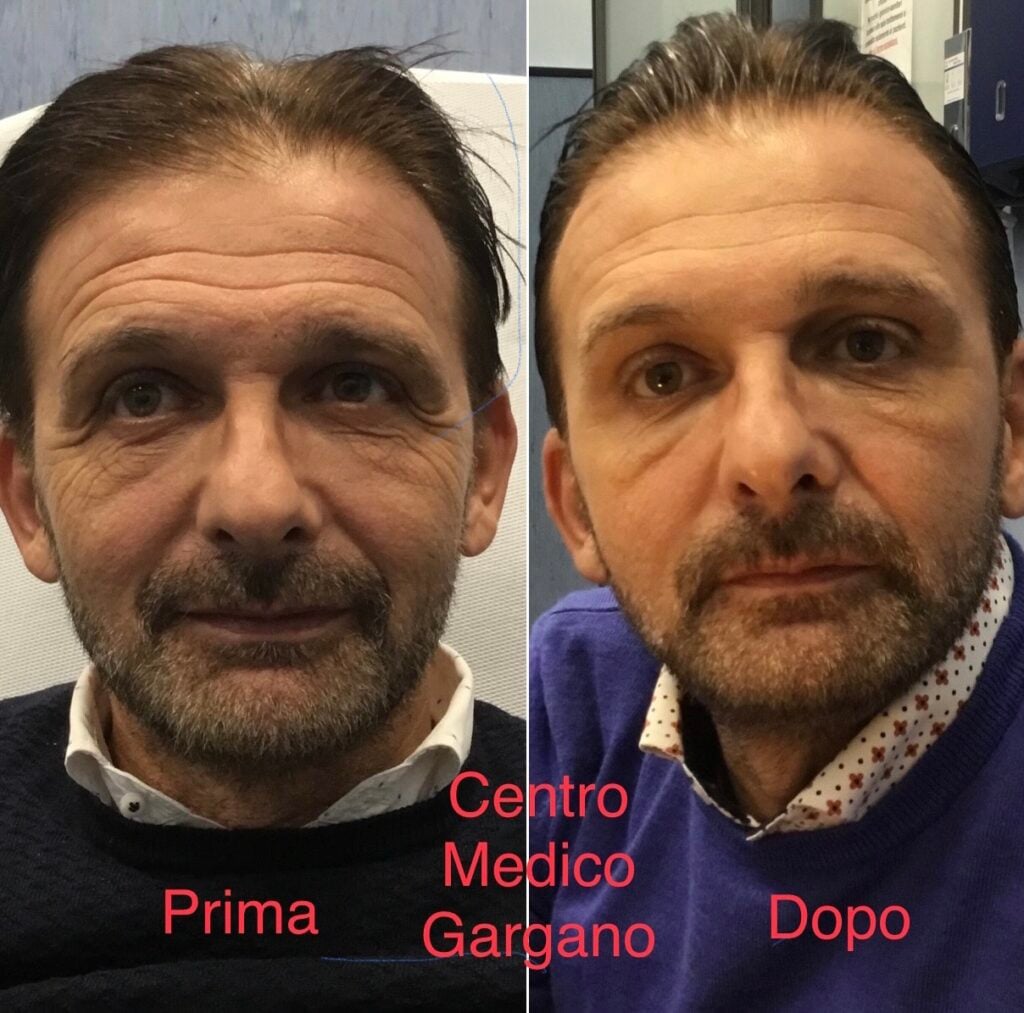
Botulinum toxin treatment in Naples is performed after a medical assessment of the face, facial movement and areas to be treated. Botulinum toxin can soften dynamic wrinkles on the forehead, between the eyebrows, around the eyes and in other selected areas, always using individual doses proportionate to the facial structure. The aim is not to change facial features but to achieve a more relaxed, fresh and natural appearance.
At Centro Medico Gargano, treatment is planned according to the patient’s characteristics, muscle strength, skin quality and desired result. The procedure is quick, performed on an outpatient basis and does not require anaesthesia. Results develop gradually over the following days, improving the appearance of expression lines and the overall harmony of the face.
Botulinum toxin may also be indicated for hyperhidrosis, particularly when excessive sweating affects the underarms, hands or other areas and interferes with quality of life. Medical assessment helps establish appropriate indications, doses and follow-up intervals.
Medical follow-up also allows the response to treatment, duration of the effect and any need for small adjustments to be assessed. Botulinum toxin in Naples is offered with a cautious, individual approach aimed at a natural-looking result. The treatment plan is always established after a direct medical assessment, with close attention to safety.
For further information, you can also read the ISSalute information sheet on botulinum toxin.
Here are 10 interesting facts about the use of botulinum toxin in medicine and aesthetic medicine:
- 1. Muscle relaxation: Botulinum toxin, commonly known as Botox, works by blocking nerve signals to muscles, causing them to relax. This makes it useful in treating many medical and aesthetic conditions.
- 2. Wrinkles: One of the most common uses of Botox in aesthetic medicine is treating facial wrinkles. It helps reduce temporary or permanent expression lines.
- 3. Chronic migraine: Botulinum toxin may be prescribed for selected adults with chronic migraine following specialist assessment. Response is assessed over time and is not guaranteed after the first session.
- 4. Hyperhidrosis: Botox can be used to treat hyperhidrosis, or excessive sweating, by blocking nerve signals to the sweat glands.
- 5. Strabismus: In selected cases, a specialist may use botulinum toxin to temporarily alter the action of an eye muscle. Strabismus and amblyopia (lazy eye) are distinct conditions.
- 6. Muscle spasticity: Botox is used to treat muscle spasticity (stiff or tight muscles) caused by various conditions, such as cerebral palsy, stroke and multiple sclerosis.
- 7. Overactive bladder: Botulinum toxin can be used to treat an overactive bladder by inhibiting the nerve signals that cause excessive bladder contractions.
- 8. Eye movement disorder: Botulinum toxin is used to treat blepharospasm, a condition causing uncontrollable eyelid contractions.
- 9. Botox treatments are temporary, which means you will need regular treatments to maintain the results.
- 10. Safety: Although derived from botulinum toxin, a highly toxic substance, botulinum toxin treatment is generally considered safe when administered by an experienced doctor. As with all medical treatments, however, there are risks and potential side effects.
Botox Standard
Personalised treatment of the classic areas of the upper third of the face: glabella, areas around the eyes and forehead, to soften expression lines while respecting facial harmony.
The doctor determines the dose and maximum number of units according to the patient’s anatomy, muscle strength and response. When Botox (onabotulinumtoxinA) is used, the protocol may involve up to 50 units. Units are product-specific: Speywood units are not directly interchangeable and require a specific dose determined by the doctor.
Follow-up assessment 2 weeks after the session. Any touch-up is free of charge if clinically necessary; the doctor determines its timing and method according to the assessment and the product used. The duration of the effect varies from person to person.
Dr Ciro Gargano assesses suitability, explains the indications, contraindications and aftercare recommendations, and obtains informed consent.
Botox Full Face
Advanced, personalised treatment covering the upper, middle and lower thirds of the face, with treatment areas and injection points selected according to anatomy. A comprehensive approach aimed at a more complete, harmonious and lasting effect. The duration of the result is individual and also depends on the patient’s response and the product used.
The doctor determines the dose and maximum number of units according to the patient’s anatomy, muscle strength and response. When Botox (onabotulinumtoxinA) is used, the protocol may involve up to 100 units. Units are product-specific: Speywood units are not directly interchangeable and require a specific dose determined by the doctor.
Follow-up assessment 2 weeks after the session. Any touch-up is free of charge if clinically necessary; the doctor determines its timing and method according to the assessment and the product used.
Dr Ciro Gargano assesses suitability, explains the indications, contraindications and aftercare recommendations, and obtains informed consent.
Frequently asked questions about Botox Standard and Botox Full Face
What is the difference between Botox Standard and Botox Full Face?
Botox Standard treats the classic areas of the upper face: the glabella, the areas around the eyes and the forehead. Botox Full Face is a more extensive treatment that may also include selected areas of the middle and lower face and the upper neck.
The difference lies in the goals, the areas treated and the selection of targeted points according to facial anatomy and movement, as well as the number of units. Full Face does not mean that every area is automatically treated.
Full Face may also last longer than Standard in areas where the doctor considers higher doses appropriate. Clinical studies of the glabella show that higher doses in the same area can prolong the effect. The dose is always determined by the doctor, and duration varies from person to person. Joseph et al., 2022.
Which additional areas may be considered for Full Face?
When clinically appropriate, the doctor may assess:
- The corners of the mouth and the chin.
- Lines at the sides of the nose, known as bunny lines.
- The lips and the area around the mouth, for specific muscular concerns.
- The upper neck and platysmal bands.
- The masseters, muscles of the jaw, when their prominence contributes to the shape of the face.
Each area is selected individually. This is not a list of areas that must all be treated, and not every aesthetic concern in these regions responds to botulinum toxin.
Does Botox add volume like a filler?
No. Botulinum toxin temporarily reduces the activity of selected muscles, whereas a filler can restore or increase volume. Botulinum toxin treatment around the lips acts on the muscular component and is not equivalent to a lip filler.
If the concern is caused by volume loss or tissue sagging, the doctor will assess a different or complementary approach.
How is the number of units decided?
The doctor decides the dose and the maximum number of units according to anatomy, muscle strength and distribution, asymmetries and individual response. A greater quantity does not automatically produce a better result.
Units are specific to each product: Speywood units are not directly interchangeable with those of other products. The distribution across different areas is also personalised.
Why do anatomical knowledge and medical experience matter?
Facial muscles are involved in expressions, smiling and everyday functions. Knowing the anatomy and assessing the face in motion helps the doctor select areas and doses without unnecessarily weakening other functions.
Some Full Face applications may be off-label, meaning that they are not included in the authorised indications for the chosen product. The doctor assesses their appropriateness and explains the expected benefits, limitations and risks as part of informed consent.
How long does the effect of botulinum toxin last?
In some patients, the effect may last 6 months or longer with Botox Standard and 9 months or longer with Botox Full Face. These durations are possible, not guaranteed: results vary from person to person.
Duration varies from person to person. Higher doses in the same area, when appropriate, can prolong the effect. [1]
In a study of the glabella, a specific high-dose protocol using incobotulinumtoxinA showed a median duration of approximately nine months, measured as the time until wrinkles returned to their baseline severity. [2]
Duration depends on the product, the areas treated, muscle activity and individual response. The doctor tailors the dose and its distribution to the patient’s anatomy.
The effect develops gradually and fades over time. The overall result is assessed at follow-up, allowing for the response times of the different areas.
Scientific references
Where can I find treatment prices, and is a touch-up included?
Current prices for Botox Standard and Botox Full Face are shown in the booking calendar when you select the treatment you require.
A follow-up assessment is planned at 2 weeks. Any touch-up is free of charge if clinically necessary. The doctor determines whether it is indicated, and its timing and method, according to the assessment and the product used: the follow-up does not automatically involve another injection treatment.
If the treatment I booked cannot be administered for medical reasons, do I lose the amount I paid?
No. If the booked treatment cannot be administered for a medical reason, such as an allergy, the amount paid will be refunded in full (100%), without any deductions.
The online booking service is designed to make things easier for patients and simplify appointment scheduling.
Book botulinum toxin treatment
Choose the agreed service and go directly to the calendar. If you are unsure which treatment is appropriate, contact the clinic before booking.
Botulinum toxin for masseter hypertrophy in Naples
The masseter is a chewing muscle located on each side of the jaw. When particularly developed, it can make the lower face appear broader or more prominent. In selected patients, botulinum toxin treatment can temporarily reduce its activity and gradually decrease its volume.
At Centro Medico Gargano, the process begins with an individual assessment: the doctor checks that the prominence is caused by the muscle, considers facial proportions and discusses benefits, limitations and possible side effects. The treatment goal is agreed upon before the procedure, without promising standardised results.
Treatment of masseter hypertrophy
Price and availability are shown in the booking calendar.
Suitability and a personalised plan are established after medical assessment. The services included are clarified before treatment.
Treating the masseters for hypertrophy or bruxism is not among the authorised indications for BOTOX (off-label use). The doctor checks the product information for the medicine chosen and explains the expected benefits, limitations and risks as part of informed consent.
Book masseter treatmentCall reception
Frequently asked questions about masseter treatment
Tap a question to read the answer.
What is masseter hypertrophy?
Is a broad jaw always caused by the masseters?
How is suitability for treatment assessed?
How does botulinum toxin act on the masseter?
Is it also a treatment for bruxism?
Can it replace a bite splint or treat jaw joint disorders?
What happens during a session? Is it painful?
How soon will I see results?
How long does the effect last?
How many sessions are needed? Must I repeat treatment regularly?
Will I be able to chew normally?
Can it change my smile or make my face look hollow?
What are the other risks, and when should I seek help?
Who should not undergo treatment?
What should I tell the doctor before the session?
What should I do after treatment?
Can repeated treatment change the jawbone?
How many units are used? Are the products equivalent?
Where can I check the cost of masseter treatment?
How can I request information or book an appointment?
Botulinum toxin and bruxism: what role can it play?
Bruxism includes chewing muscle activities such as clenching and grinding, during sleep or while awake. It may coexist with bulky masseters, but it is not the same as muscle hypertrophy. Jaw pain and headaches alone are not enough to diagnose bruxism.
In selected cases, botulinum toxin may reduce the force of contractions in the treated muscles and some muscular symptoms. Studies do not show that it eliminates the causes or all episodes of bruxism. This is an off-label use to be considered after assessment by a dentist or a clinician specialising in jaw function, with appropriate conservative interventions considered first.
A bite splint, when prescribed, can protect the teeth and serves a different purpose from muscle treatment. Sleep disorders, tooth wear, joint locking and persistent pain require specific assessment. Botulinum toxin does not automatically replace this care pathway.
Botulinum toxin for headaches and chronic migraine
Headache is a symptom with many possible causes. The authorised indication for BOTOX concerns chronic migraine in selected adults: headaches on at least 15 days per month for more than three months, including at least 8 with migraine features, with an inadequate response to or intolerance of preventive medicines. Diagnosis requires specialist assessment.
Treatment aims to reduce the burden of headaches over time and is not intended to stop an individual attack immediately. A headache diary helps measure the response.
Efficacy and safety have not been established for episodic migraine or chronic tension-type headache. Cosmetic treatment of the face or treatment of the masseters alone is not equivalent to the chronic migraine protocol.
