




Venous ulcers are chronic leg lesions, often located in the ankle region, associated with venous hypertension and chronic venous insufficiency. However, not all lower limb wounds are of venous origin: before starting compression therapy or a procedure, it is necessary to clarify the cause of the lesion and also evaluate arterial circulation, general conditions and any factors hindering healing.
At Centro Medico Gargano in Naples, the pathway includes clinical assessment, wound study and, when indicated, venous colour Doppler ultrasound. Treatment is chosen based on aetiology, the presence of oedema and reflux, skin conditions and tolerance to compression.
How to recognise a possible venous ulcer
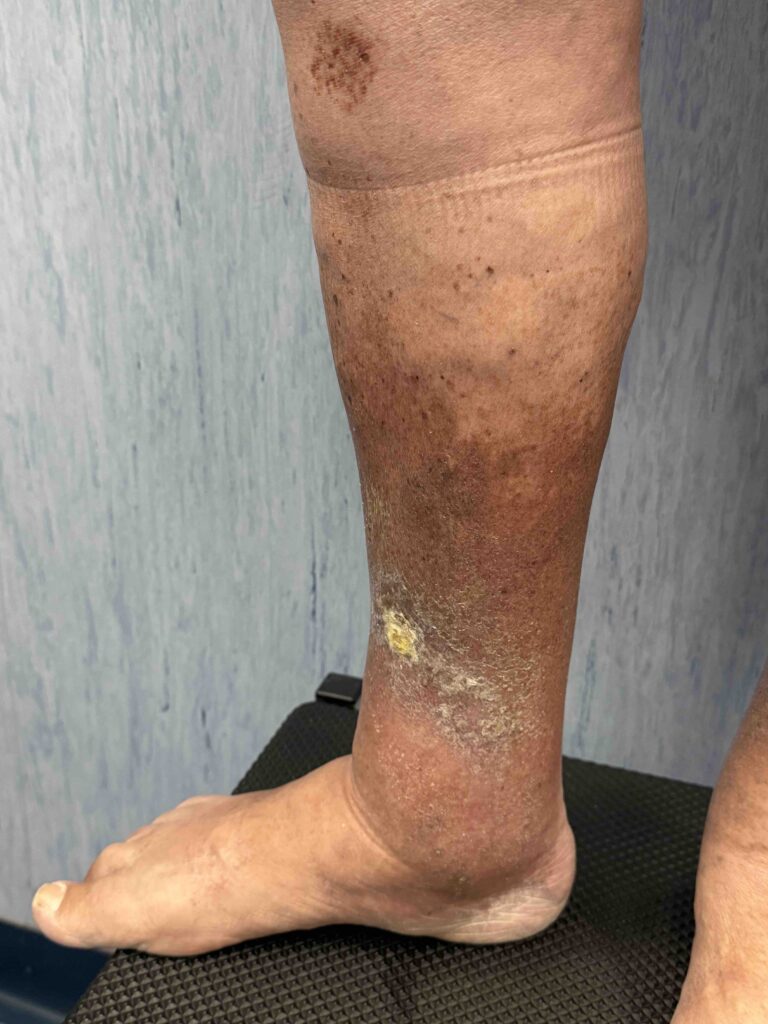
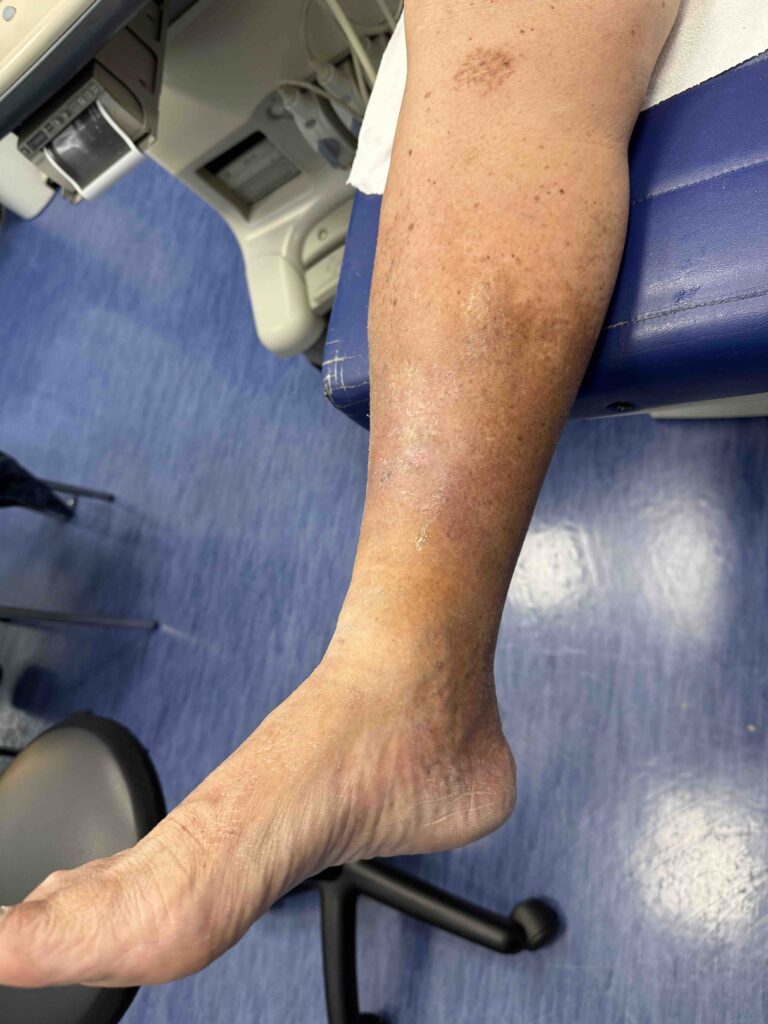
The appearance of the wound alone does not always allow for a definitive diagnosis. Elements compatible with a venous origin may include:
- localisation in the lower part of the leg, often near the ankle;
- oedema and a feeling of heaviness;
- varicose veins or previous episodes of venous thrombosis;
- brownish pigmentation, eczema, induration or other skin alterations;
- a wound that tends to persist or recur.
Significant pain, cold or pale foot, reduced peripheral pulses, necrosis, fever, rapidly spreading redness, marked foul odour or sudden worsening require timely assessment. A lesion can be venous, arterial, neuropathic, inflammatory, traumatic or have multiple causes simultaneously.
Why a complete diagnosis is needed
The initial assessment considers wound duration, previous ulcers, thrombosis, venous interventions, pain, oedema, medications, diabetes, mobility and other relevant conditions. Clinical examination includes the skin, the lesion, peripheral pulses and signs of venous or arterial insufficiency.
Before applying significant compression, it is necessary to verify that the arterial circulation is adequate, through clinical assessment and appropriate investigations. When a venous component is suspected, colour Doppler ultrasound studies the superficial and deep system, looks for reflux or obstructions and helps determine if treating a responsible vein is indicated.
I componenti del trattamento
Compression, when appropriate
Compression therapy is a central element in the management of uncomplicated venous ulcers, but must be prescribed and applied appropriately. Type of bandage or stocking, compression intensity, leg shape, oedema, mobility and patient tolerance must be individually assessed. In the presence of arteriopathy, neuropathy, heart failure or other conditions, the programme may require adaptations or specialist supervision.
Wound care
The lesion is cleansed and protected with a dressing suitable for the amount of exudate, surrounding skin and patient comfort. Debridement may be indicated in the presence of non-viable tissue, but the technique and timing depend on the clinical picture. No dressing replaces the control of venous hypertension when this is the primary cause.
Infection and antibiotics
Bacterial colonisation of a chronic wound does not automatically equate to infection. Systemic antibiotics are considered when clinical signs compatible with infection are present and should not be used routinely simply because the ulcer is open.
Treatment of venous reflux
If colour Doppler ultrasound documents significant superficial venous reflux and the patient is a suitable candidate, early treatment of the responsible vein, combined with compression and wound care, can promote faster healing and increase ulcer-free time. The method is chosen based on anatomy and may include thermal endovenous procedures, ultrasound-guided sclerotherapy or other options in selected cases.
Sclerotherapy does not automatically replace every other procedure and is not indicated for all ulcers. It can be useful when reflux or peri-ulcerous varices are accessible to this technique, after evaluating the deep system, arterial circulation, thrombotic risk and general conditions.
The pathway at Centro Medico Gargano
The assessment is carried out by Dr. Ciro Gargano, a medical surgeon specialising in radiodiagnostics, angiologist and flebologo. The pathway integrates clinical examination, ultrasound diagnostics and treatment of venous insufficiency when indicated.
- assessment of the lesion and possible causes;
- evaluation of arterial circulation before compression when necessary;
- venous colour Doppler ultrasound in cases compatible with venous insufficiency;
- compression and dressing programme;
- possible treatment of superficial reflux or peri-ulcerous varices;
- clinical follow-up and prevention of recurrence after healing.
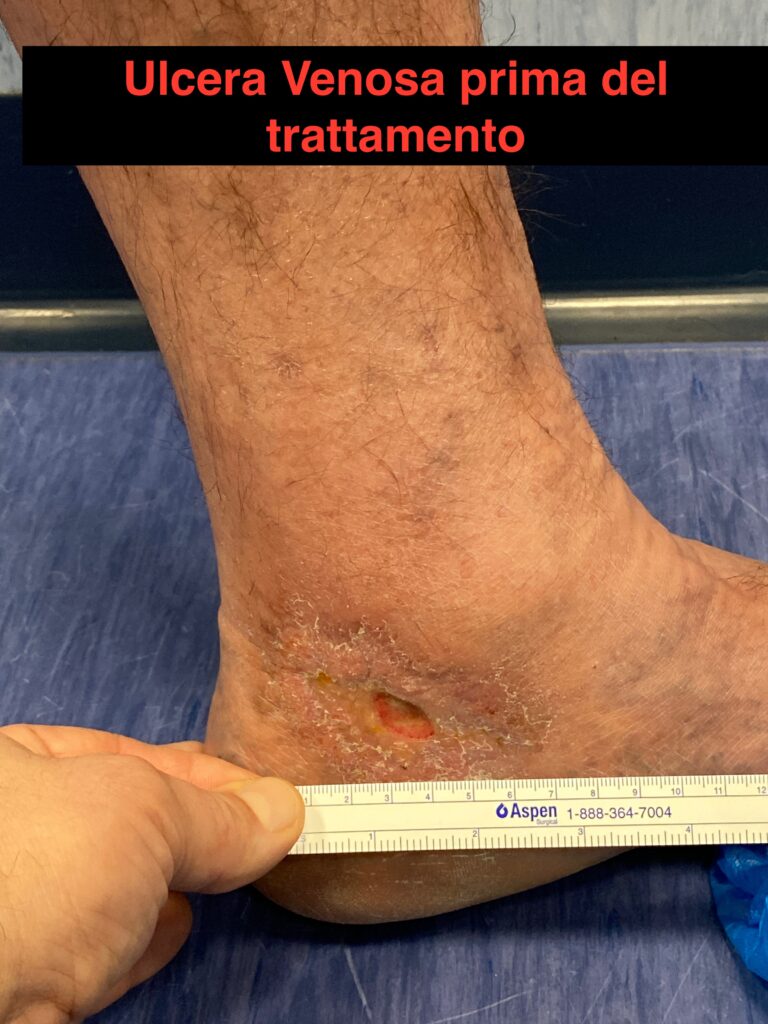

Ankle lesion: photographic comparison
Before and after foam sclerotherapy photographs: before on the left, after on the right. The subsequent photograph was taken less than 2 months after treatment. The comparison documents the case shown; it does not, by itself, establish the diagnosis or outcome for other patients.
Click or tap a photograph to enlarge it.
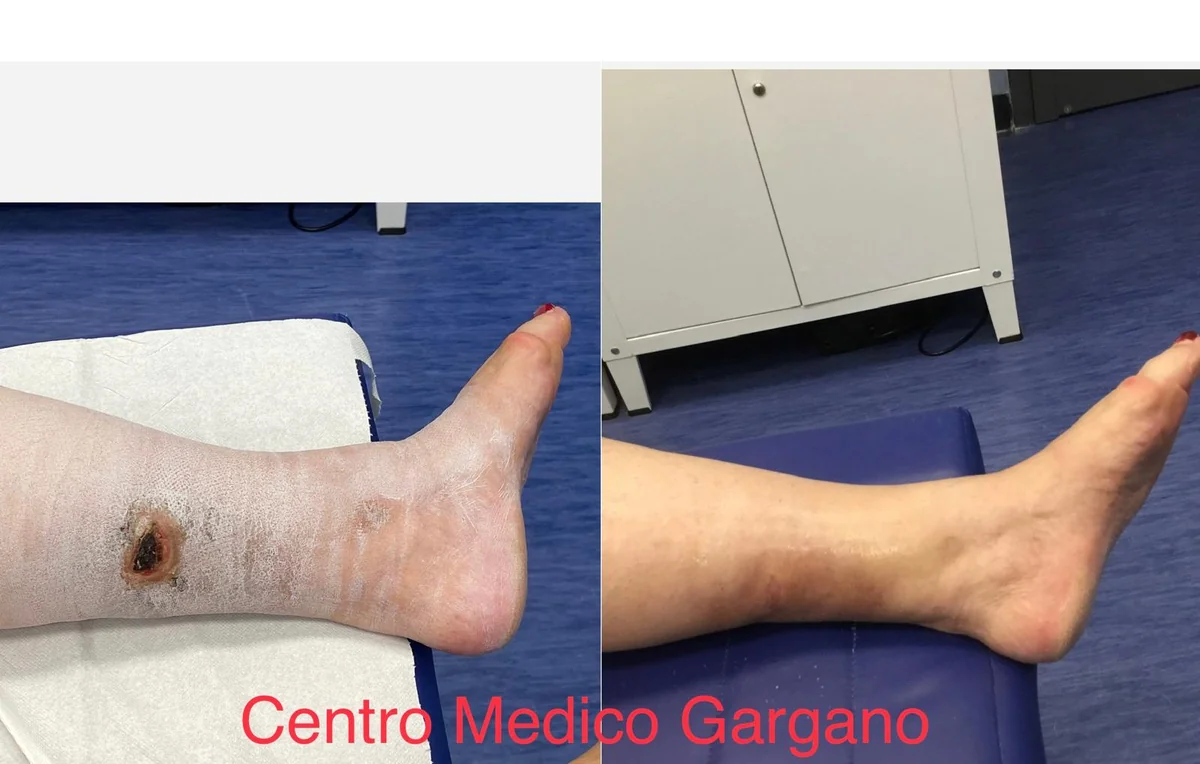
Results are individual. The photographs document the cases shown and do not guarantee the same outcome for other people.
Healing times and risk of recurrence
It is not possible to predict a uniform time for everyone. Ulcer size and duration, oedema, arteriopathy, mobility, diabetes, infection, adherence to compression, and reflux characteristics influence the response. Even after the lesion has closed, recurrences can occur: for this reason, maintenance compression when indicated, follow-up checks, and treatment of correctable venous factors are important.
Frequently Asked Questions
Is every leg ulcer venous?
No. Ulcers can be arterial, neuropathic, inflammatory, traumatic, neoplastic, or mixed. A wound that does not heal requires an assessment, not just a dressing.
Can compression be applied immediately?
Not always. First, arterial circulation and any contraindications or precautions must be evaluated. The intensity and compression system must be chosen by the professional based on the patient.
Does sclerotherapy heal all venous ulcers?
No. It can treat certain refluxes or varices in selected patients, but it must be part of a programme that includes diagnosis, compression, wound care, and follow-up. It does not automatically replace other endovenous or surgical methods.
Are antibiotics needed?
Only when the doctor recognises clinical signs of infection or another specific indication. They are not routinely prescribed for every open ulcer.
Sources and further information
- European Society for Vascular Surgery: guidelines on chronic venous disease of the lower limbs.
- NICE: compression products for the treatment of venous ulcers.
- EVRA trial: early endovenous treatment of superficial reflux and healing of venous ulcers.
For address and practical information, consult the page Contacts and where to find us.
