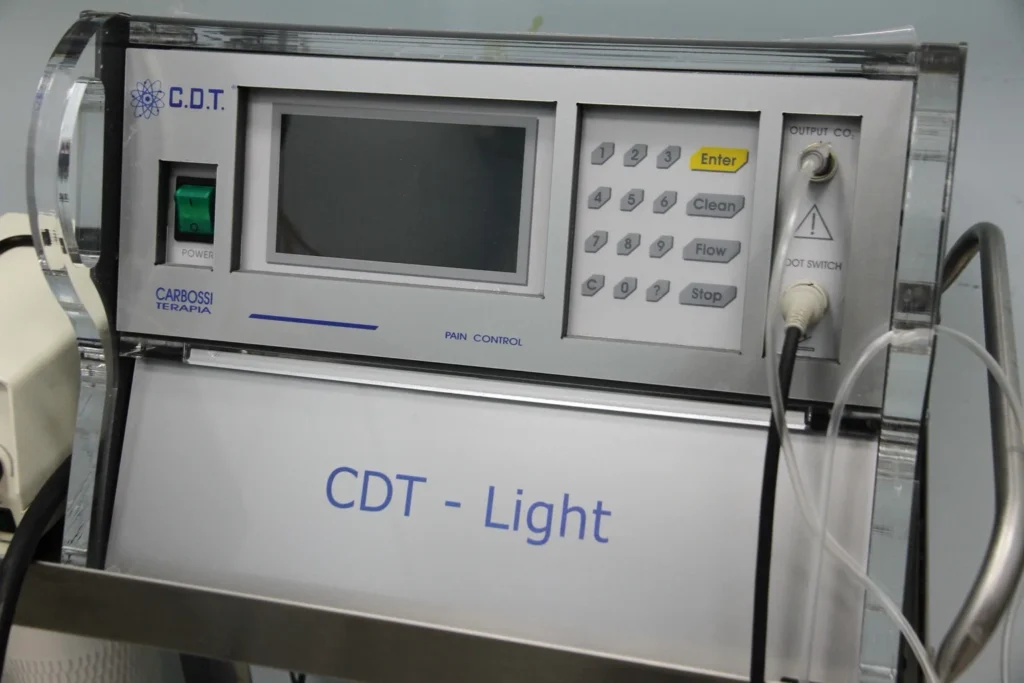

Carboxytherapy in Naples is indicated for patients with cellulite, fluid retention, heavy legs, reduced skin firmness and microcirculation disorders. At Centro Medico Gargano, carboxytherapy treatment in Naples is tailored to the clinical findings, tissue quality and the patient’s aesthetic or functional goals.
A treatment to consider for selected skin concerns: indications, expected benefits and the limits of the evidence should be discussed with a doctor.
Carboxytherapy is a non-surgical medical procedure that uses carbon dioxide (CO2) to treat a range of conditions. It was originally introduced in France in 1932 to treat conditions associated with poor blood circulation. Over the years, its uses have expanded, and it is now used for a wide range of aesthetic and medical concerns.
We have used this technique for years, both as an adjunct in treating venous disease and to improve various aesthetic conditions, for example in the treatment of cellulite. Where cellulite and fluid retention occur alongside localised fat deposits, it may also be useful to consider injection treatment for localised fat in Naples.
Carboxytherapy in Naples: how is treatment performed?
During carboxytherapy, a doctor injects carbon dioxide beneath the skin using a fine needle. Local effects on circulation and skin have been studied, but the available evidence has limitations and does not allow cell regeneration, healing or rejuvenation to be guaranteed.
Carboxytherapy in Naples is performed on an outpatient basis, in short sessions that are generally well tolerated. The carboxytherapy protocol may vary according to the area treated and the presence of cellulite, fluid retention, heavy legs or reduced skin firmness.
Original video. Audio and on-screen text have not been translated.
Carboxytherapy has become widely used in aesthetic medicine, particularly for cellulite, localised fat deposits, stretch marks, wrinkles and loose skin. In medical practice, it is used to improve blood circulation and to treat peripheral vascular disease and chronic skin ulcers.
What is carboxytherapy used for?
- Improving blood circulation: Injecting carbon dioxide stimulates dilation of the blood vessels, improving circulation and the supply of oxygen to tissues.
- Reducing cellulite: It has been studied for cellulite and localised fat, but neither the effect nor its duration is guaranteed.
- Tissue regeneration: Greater oxygenation stimulates collagen production, improving skin elasticity and counteracting skin laxity.
- Reducing dark circles: By increasing microcirculation around the eyes, carboxytherapy may reduce dark circles and improve the appearance of the skin beneath the eyes.
- Treating stretch marks: Its regenerative and collagen-stimulating action may help improve the appearance of stretch marks.
- Reducing scars: The treatment promotes repair of damaged tissue, helping improve the appearance of recent or older scars.
- Lipolytic action: Evidence for lasting reduction of localised fat is limited; treatment should not be described as a fat-dissolving procedure with guaranteed results.
- Treating venous ulcers and chronic wounds: It promotes healing of chronic skin lesions by improving microcirculation and oxygen supply.
- An injectable treatment: benefits and risks to assess: It can cause pain, swelling or bruising. The doctor assesses indications, contraindications and possible complications before treatment.
But is it safe?
Carboxytherapy is generally considered safe, with a low risk of side effects. However, as with any medical procedure, it is important to discuss your needs and expectations with an experienced doctor to establish whether carboxytherapy is right for you.
Always remember that, although carboxytherapy may offer significant improvements, it is not a miracle cure. Results can vary between individuals depending on factors such as genetics, lifestyle and age.
Carboxytherapy of the neck and décolletage: the procedure
Dr Ciro Gargano demonstrates a stage of carboxytherapy of the neck and décolletage, accompanied by his commentary.
Original commentary by Dr Ciro Gargano in Italian. The text below is a summary of the video.
Video summary: The video shows a stage of the treatment and the area being treated. Suitability is determined through an individual assessment.
Carboxytherapy after intralipotherapy: a shoulder case
This case concerns a shoulder lipoma. In the video, ultrasound assessment and ultrasound-guided intralipotherapy with Aqualyx are followed by carboxytherapy, with commentary by Dr Ciro Gargano. The full case is presented on the intralipotherapy page.
Carboxytherapy has also been studied for some forms of alopecia, but the evidence is limited. Its use after a hair transplant should not be presented as a routine recommendation and requires specialist assessment.
We have used carboxytherapy successfully in Naples for years, with hundreds of satisfied patients.