




Initial haemorrhoid consultation
Assessment and outpatient treatment of haemorrhoids, with sclerotherapy when indicated. An initial consultation is required before treatment. You can view availability and pay for the consultation online or at the clinic.
Book the initial consultationHaemorrhoid sclerotherapy is arranged after the consultation, when recommended by the doctor. It is a separate service from the initial consultation. Follow the doctor’s instructions and contact reception to arrange it. The price of each service is available in its booking calendar.
Treatment already recommended: call receptionFoam haemorrhoid sclerotherapy in Naples is an outpatient treatment that may be considered for some patients with symptomatic internal haemorrhoidal disease. The indication is only given after a medical assessment: rectal bleeding, in fact, should not be automatically attributed to haemorrhoids without a proper assessment.
Haemorrhoids are not simply “swollen veins”, but normal vascular cushions of the anal canal that can increase in volume, bleed, or prolapse. The choice between conservative therapy, sclerotherapy, and other options depends on the symptoms, the grade of the disease, and the characteristics of the individual patient.
When might haemorrhoid sclerotherapy be indicated in Naples?
Sclerotherapy may be considered primarily for symptomatic internal haemorrhoids, especially when the main problem is bleeding and conservative therapy alone does not provide adequate control. It may also be considered in some cases with congestion, discomfort, or prolapse, but it is not suitable for all forms of haemorrhoidal disease.
- Bleeding during or after defecation.
- Discomfort, itching, discharge, or a feeling of anal heaviness.
- Internal haemorrhoids that tend to prolapse.
- Persistent symptoms despite correcting constipation, bowel habits, and diet.
- Recurrence of symptoms after previous treatments, to be re-evaluated on a case-by-case basis.
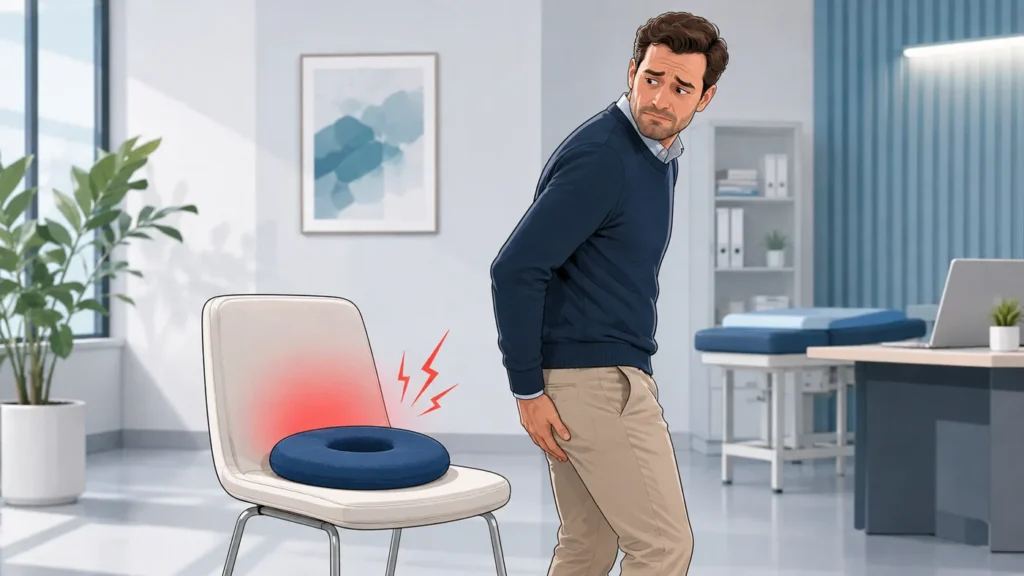
Important: blood in stools, anaemia, recent changes in bowel habits, weight loss, or persistent pain require adequate diagnostic investigation. The consultation also serves to rule out fissures, fistulas, inflammation, and other causes of bleeding.
How is the sclerosing foam treatment performed?
During the procedure, the doctor injects a controlled amount of sclerosing substance in foam form into the internal haemorrhoidal tissue, at a site chosen to minimise discomfort. The substance causes a controlled local reaction that promotes the reduction of bleeding and the volume of the treated tissue.
The procedure is outpatient, involves no incisions or stitches, and typically does not require general anaesthesia or hospitalisation. Tolerability is generally good, but perception varies from person to person: for accuracy, it is not possible to promise a completely pain-free or discomfort-free treatment.
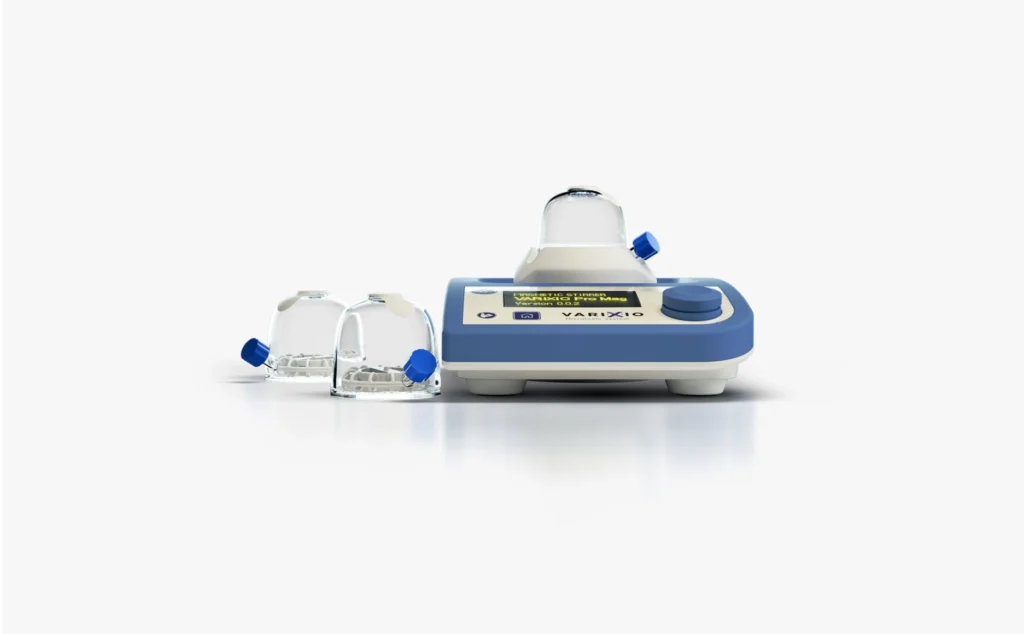
Automated foam preparation with Varixio®
At Centro Medico Gargano, sclerosing foam is not prepared manually: we use Varixio®, an automated system for micro-foam preparation. Most previous studies on haemorrhoidal sclerotherapy used manual preparation, generally with the Tessari method, in which sclerosant and gas are mixed between two syringes.
Varixio® automates mixing in a dedicated capsule and allows the foam to remain homogeneous during the procedure. Studies on its physical characteristics describe more uniform bubble sizes, greater stability, and standardised preparation. The technical advantage is primarily reproducibility: it reduces variability associated with manual preparation and the operator, resulting in foam with more consistent characteristics.
The initial specific clinical evidence on haemorrhoids is encouraging. An observational study of 50 patients with second-degree disease reported complete resolution of bleeding in 72% of patients after one week and 78% at three months, with no major complications. A subsequent retrospective study of 218 patients with grade I–IV haemorrhoids documented favourable results and a low recurrence rate during follow-up, again without major complications.
What does this mean for the patient? Varixio® represents an important technical evolution in foam standardisation and may contribute to making the treatment more reproducible. However, at present, no randomised studies are yet available that directly demonstrate superior clinical efficacy compared to manual preparation in haemorrhoids. For transparency, therefore, we do not promise guaranteed results: we evaluate the indication and response in the individual patient, while evidence on the automated system continues to develop.
Sources: study on the physical characteristics of automated foam; preliminary clinical study on 50 patients treated with Varixio®; 2025 study on 218 patients; systematic review of haemorrhoidal sclerotherapy.
Why a first consultation is mandatory
The first consultation serves to gather the clinical history, evaluate symptoms, and determine if sclerotherapy is truly appropriate. When indicated, the assessment may include inspection, rectal examination, and anoscopy. It is also important to inform the doctor of any anticoagulant or antiplatelet therapies, allergies, pregnancy, intestinal diseases, previous surgeries, and other relevant conditions.
Typically, no preparation is needed the day before: for the first consultation and for any sclerotherapy, no bowel preparation or fasting is required, unless otherwise medically indicated. If, at the end of the consultation, the doctor confirms that sclerotherapy is indicated, feasible, and safe in the specific case, the treatment can be performed even in the same session, without necessarily having to return on another day. This possibility is determined on a case-by-case basis and cannot be guaranteed before the assessment. Patients should not discontinue medication on their own initiative.
If the clinical picture is not suitable for sclerotherapy, possible alternatives are discussed: medical and behavioural therapy, rubber band ligation, proctological or surgical evaluation, and further diagnostic investigations.
How many sessions may be necessary?
One session may be sufficient for some patients; in others, it may be appropriate to repeat the treatment after a clinical re-evaluation. Additional sessions are not automatic and are only proposed when necessary. The complete overview of the process and costs is available in the informative PDF sent via email.
Haemorrhoidal disease can have a chronic and relapsing course. Sclerotherapy treats the current clinical picture, but cannot guarantee that symptoms will not recur over the years. A new manifestation at a later date requires a new assessment and should not be considered an unlimited “touch-up” included in the previous session.
Advantages and limitations of haemorrhoid sclerotherapy
- Outpatient and minimally invasive treatment.
- No cuts or stitches.
- No hospitalisation in most cases.
- Generally rapid return to activities, according to medical advice.
- Possibility of repeating the treatment when clinically appropriate.
- Not indicated for every grade or type of haemorrhoidal disease.
- Results cannot be guaranteed, and recurrence is possible.
Possible side effects
Like any medical procedure, sclerotherapy can cause side effects. These include local discomfort or pain, tenesmus, modest bleeding, inflammation, thrombosis, ulceration, or urinary disturbances; more significant reactions are rare. Personalised instructions and warning signs for contacting the doctor are explained before and after treatment.
Frequently Asked Questions
Can I book sclerotherapy directly?
You book a first consultation, which is essential to confirm the diagnosis and determine if sclerotherapy is indicated. If, during the consultation, the doctor deems the treatment appropriate, feasible, and safe, sclerotherapy can be performed during the same appointment. This possibility is evaluated on a case-by-case basis and is not guaranteed in advance.
Is any preparation required before the consultation or sclerotherapy?
Typically no: no bowel preparation or fasting is required the day before, unless otherwise medically indicated. It is important to disclose any ongoing therapies and not to discontinue medication on your own initiative.
Where can I find the costs of the treatment pathway?
The cost of the first consultation for haemorrhoids is shown in the booking calendar: you can book it online and choose whether to pay online or directly at the practice. The complete overview of costs for consultations, sessions, and follow-ups is detailed in the informative PDF, which can be requested via the form on this page.
Is the treatment painful?
It is generally well-tolerated because the injection is performed in the internal part of the anal canal, but sensitivity and perception of discomfort vary. It is not correct to promise complete absence of pain.
Can I return to my activities immediately?
Many patients quickly resume normal activities, but timings and limitations depend on the clinical picture and the instructions received after the procedure.
Can haemorrhoids return?
Yes. Haemorrhoidal disease can recur regardless of the treatment used. Bowel regularity, fibre, hydration, and correcting straining during defecation help reduce predisposing factors, but do not completely eliminate the risk.
Further reading on haemorrhoids
Choose the guide closest to your question while keeping the assessment and treatment pathway in view.
- Haemorrhoid supplements: evidence and limitations — the role of these products, precautions and when to seek assessment.
- Haemorrhoids: 7 habits to reduce constipation and symptoms — diet, bowel regularity and everyday care.
- How to choose a haemorrhoid clinic in Naples — diagnosis, alternatives, treatment information and clear costs.
- Haemorrhoid sclerotherapy: 10 frequently asked questions — preparation, sessions, recovery, limitations and possible adverse effects.
Scientific Evidence
Sclerotherapy is included among the outpatient treatments for haemorrhoidal disease in the clinical guidelines of the American Society of Colon and Rectal Surgeons. Clinical studies and systematic reviews have evaluated the efficacy, safety, number of sessions, and possibility of recurrence of polidocanol foam: randomised study, systematic review and meta-analysis, and three-year multicentre follow-up.
First consultation for haemorrhoid sclerotherapy in Naples
Centro Medico Gargano is located at Via Marchese Giuseppe Palmieri 71, Naples. A first consultation is mandatory to determine if sclerotherapy is indicated. First consultation for haemorrhoids. Book online by choosing your day and time. You can pay online or directly at the practice.
Receive the informative PDF
Enter your email address to receive the complete document from Centro Medico Gargano on haemorrhoid sclerotherapy.
In the PDF, you will find the pathway from the first consultation, the indicative number of sessions, costs, follow-up between sessions, and key information on safety and possible recurrences.
The document is sent free of charge. It is for informational purposes only and does not replace a medical assessment.
