



A phlebologist is a doctor who assesses diseases of the veins. At Centro Medico Gargano in Naples, the assessment is aimed at understanding the origin of varicose veins, spider veins, swelling, heaviness, pain and other venous circulation disorders, avoiding a ‘one-size-fits-all’ approach to treatment.
Assessments are carried out by Dr Ciro Gargano, a surgeon specialising in radiodiagnostics, angiologist and phlebologist. The “Colour Duplex Ultrasound and Vascular Consultation” service is available for online booking, which includes medical history, specialist consultation, colour duplex ultrasound study of the indicated vascular area and the issuance of a medical report.
When to see a phlebologist
A phlebological assessment may be useful in the presence of:
- varicose veins or dilated and tortuous superficial veins;
- spider veins and telangiectasias, especially before planning treatment;
- swelling, heaviness, tension, itching or leg cramps;
- skin changes, pigmentation, eczema or leg ulcers;
- hard and painful veins or previous episodes of thrombosis and thrombophlebitis;
- check-ups after previous venous treatments.
Sudden swelling of a single leg, significant pain, extensive redness, difficulty breathing or chest pain require urgent medical assessment and not a standard deferrable booking.
What happens during a phlebological consultation
The consultation begins with the clinical history: symptoms, duration, family history, pregnancies, occupation, physical activity, medications, previous surgeries and any thrombotic episodes. The examination of the legs considers the distribution of varices, oedema, skin, spider veins and signs of venous insufficiency or other conditions.
Not every leg complaint is due to the veins. Swelling and pain can have different causes; for this reason, diagnosis comes before the choice of therapy. Further information on swollen and heavy legs is also available.
The role of venous colour duplex ultrasound
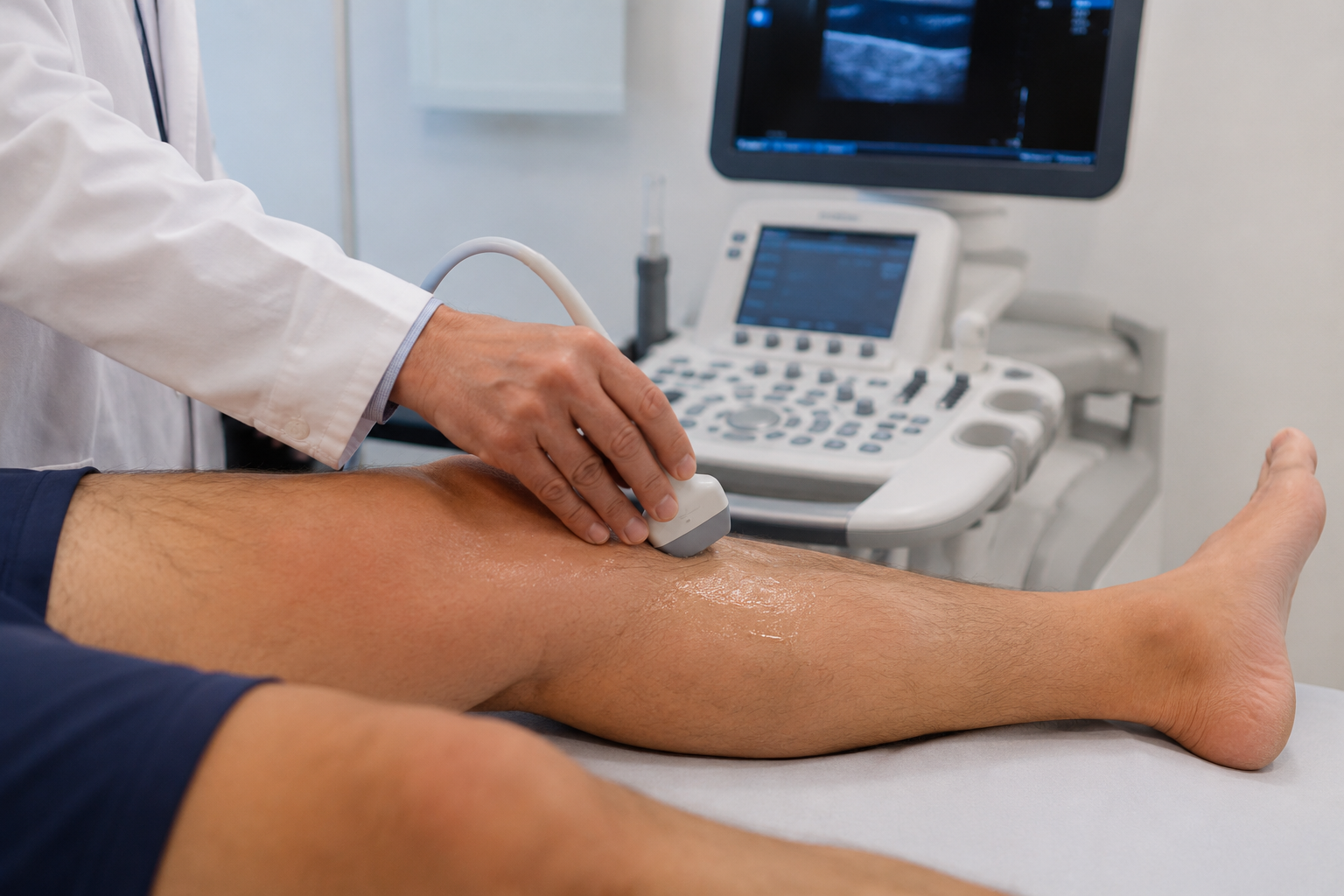
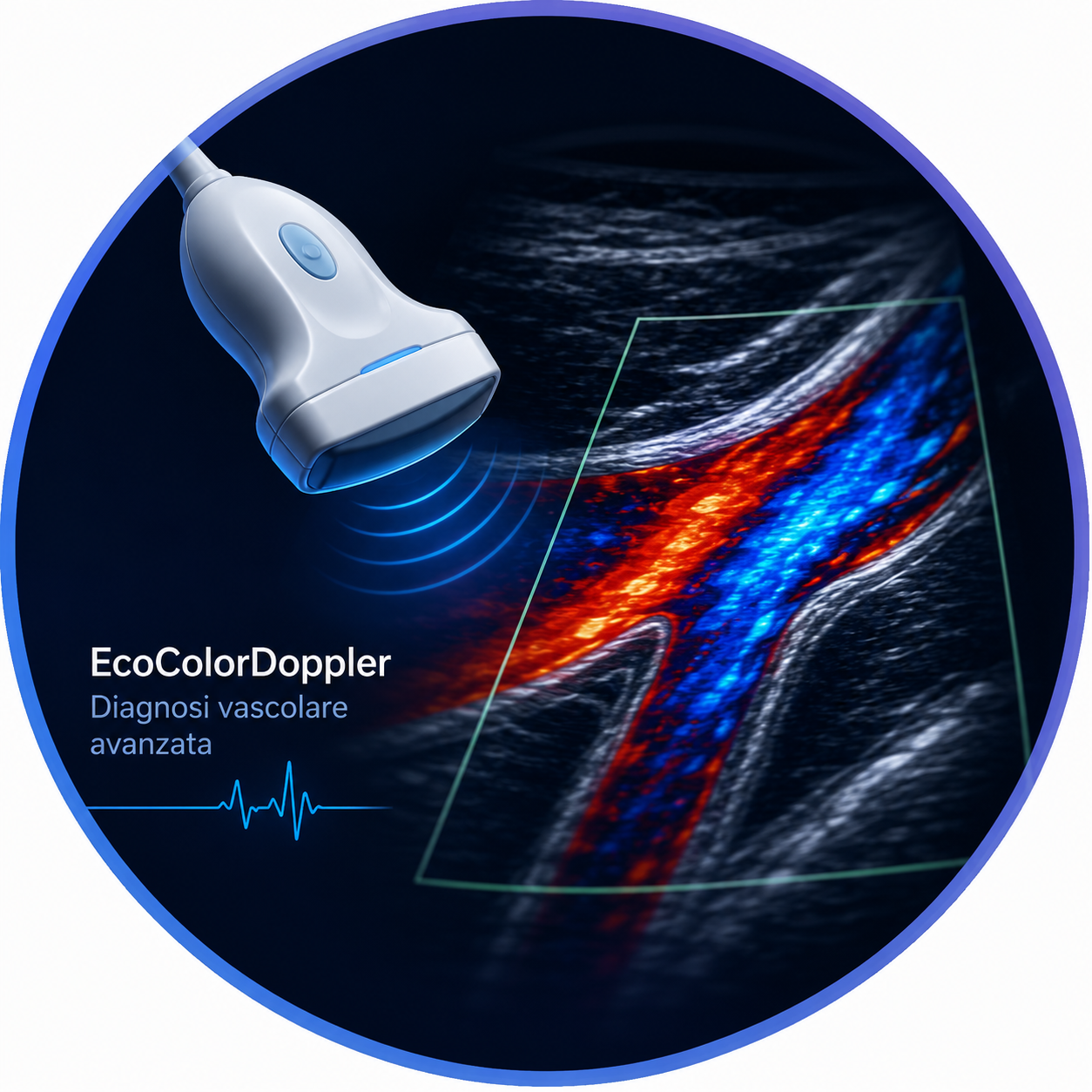
Colour duplex ultrasound studies the patency of the deep veins, the superficial system, the saphenous veins, the main junctions, reflux and varicose tributaries. It can be performed in a lying or standing position, with dynamic manoeuvres, when the clinical question requires it.
The examination helps distinguish a predominantly aesthetic problem from functional venous disease and determines whether monitoring, compression, sclerotherapy, saphenous treatment or other options are appropriate.
Problems assessed
Varicose veins and venous insufficiency
Varicose veins can be associated with reflux, pain, heaviness, swelling, itching and skin changes. Treatment depends on the site of the problem and not just the external appearance of the veins. To understand the differences, symptoms and diagnosis, read our guide to venous insufficiency.
Spider veins and telangiectasias
Spider veins can be isolated or fed by reticular veins and associated with a broader venous disorder. Sclerotherapy for spider veins and other techniques are considered after defining the characteristics and origin of the visible vessels.
Ulcers and skin changes
A leg wound is not automatically venous. The page on venous ulcers describes why arterial circulation and other possible causes must also be considered.
Possible treatments and pathways
Following diagnosis, periodic monitoring, physical activity, correction of contributing factors, compression therapy, liquid or foam sclerotherapy, treatment of varicose tributaries, procedures for saphenous insufficiency or referral to another specialist may be indicated. Indications, benefits, limitations and possible side effects are discussed in relation to the individual clinical picture.
Dr Ciro Gargano
Dr Ciro Gargano graduated in Medicine and Surgery from the Federico II University of Naples, is a specialist in Radiodiagnostics and holds a Level II University Master’s degree in Haemodynamics and Advanced Venous Surgery from the University of Ferrara. His work integrates clinical assessment, vascular ultrasound diagnostics and the treatment of venous pathologies. His full profile is available on the page Angiologist and phlebologist in Naples: Dr Ciro Gargano.
Frequently asked questions
What is the difference between an angiologist and a phlebologist?
Angiology generally concerns arteries, veins and microcirculation. Phlebology is focused on venous pathologies. In practice, these skills can be integrated.
What does the online bookable service include?
The “Colour Duplex Ultrasound and Vascular Consultation” service includes medical history, specialist consultation, colour duplex ultrasound of the indicated vascular area and the issuance of a medical report. In this way, clinical and instrumental assessments are integrated into the same appointment.
Is it possible to assess only spider veins?
Yes. The assessment allows us to understand if the spider veins are isolated and which technique may be most appropriate, without promising complete or permanent elimination.
Is the treatment decided during the consultation?
It is often possible to define a direction at the first assessment. In more complex cases, further tests or a separate planning session may be necessary.
Reference sources
The general framework is consistent with the NICE guideline on the diagnosis and management of varicose veins and the ESVS guidelines on chronic venous disease of the lower limbs.
For the address and practical directions, please consult the Contact and location page.
