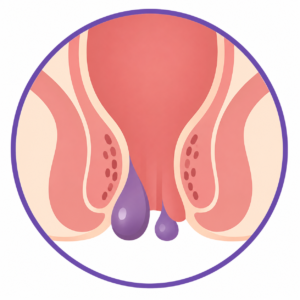
Haemorrhoids are normal vascular structures in the anal canal. The term haemorrhoidal disease is used when they cause symptoms, such as bleeding, prolapse, itching, hygiene difficulties or pain in some circumstances. Addressing constipation and bowel habits may reduce symptoms and the risk of worsening, but it does not guarantee that the problem will not develop or recur.
Recommendations depend on symptoms, the type of haemorrhoids and the findings of the consultation.
1. Increase fibre gradually
Fruit, vegetables, pulses and wholegrains help produce softer, formed stools. Guidelines recommend fibre and improved bowel habits as the first intervention for patients with haemorrhoid symptoms. Increasing fibre too quickly may cause bloating or wind; a fibre supplement may be considered in some cases.
2. Drink an amount appropriate to your circumstances
Fluids help fibre work, but there is no fixed quantity suitable for everyone. Individual needs, climate, physical activity, diet and heart or kidney conditions should be considered. There is no need to force yourself to drink two litres a day when medical advice differs.
3. Avoid straining during bowel movements
Prolonged straining increases pressure on haemorrhoidal structures. It is better not to persist when a bowel movement does not occur and to address the cause of hard stools or difficulty passing them. Laxatives and other products should not be used long term without appropriate assessment.
4. Limit time spent on the toilet
Sitting on the toilet for a long time, including while using a phone or tablet, prolongs straining and local pressure. Respond to the urge without postponing it, but avoid prolonged sessions and repeated attempts.
5. Manage both constipation and diarrhoea
Constipation is not the only concern: frequent bowel movements and diarrhoea may irritate the anal area and worsen symptoms. Persistent symptoms warrant investigation of the cause. Medicines such as opioids, iron and other products may change bowel habits, but you should not stop them on your own.
6. Move regularly
Physical activity suited to your health supports bowel regularity and weight management. However, no specific exercise can prevent or cure haemorrhoids. During a painful episode, some activities may need temporary adjustment.
7. Maintain hygiene without irritating the skin
After a bowel movement, gentle cleaning is preferable, avoiding rubbing, harsh cleansers and scented wipes if they cause irritation. Spicy foods and alcohol are not universal causes of haemorrhoids: they can be limited if you notice a repeatable link with your symptoms, without imposing blanket exclusions.
Bleeding should not automatically be attributed to haemorrhoids
Blood requires clinical assessment, particularly if bleeding is new, recurrent or associated with anaemia, altered bowel habits, abdominal pain, weight loss or a family history of colorectal disease. Even after haemorrhoids have been diagnosed, persistent bleeding warrants reassessment. Necessary investigations depend on age, symptoms and screening programmes.
When to see a doctor
A consultation is appropriate when bleeding, prolapse, itching, pain or hygiene difficulties persist despite conservative measures. A suddenly appearing anal lump with severe pain may indicate a thrombosed external haemorrhoid and requires prompt assessment. Fever, increasing pain, discharge or significant bleeding should not be managed solely with home remedies.
When everyday habits are not enough
In appropriate cases, medical treatments, rubber band ligation, sclerotherapy and other outpatient or surgical procedures may be considered. Haemorrhoid sclerotherapy is one option for selected internal haemorrhoids: it is not always painless, not automatically more effective than alternatives and does not replace surgery for every patient.
Reference source
The recommendations are consistent with the 2024 American Society of Colon and Rectal Surgeons guidelines, which recommend dietary and behavioural changes as initial treatment and advise against automatically attributing rectal bleeding to haemorrhoids.
Preventing haemorrhoids: further reading and limitations
No diet can close a varicose vein, remove visible spider veins or cure lymphoedema. However, nutrition can support general health, weight management, regular bowel movements and skin care. These factors may contribute to overall management, but they do not replace diagnosis, compression, exercise or medical treatment when indicated.
Varicose veins, spider veins and lymphoedema are different problems
The development of varicose veins is mainly related to abnormalities of the valves and venous return. Visible spider veins may be isolated or associated with reticular veins or reflux. In contrast, lymphoedema is chronic swelling caused by inadequate drainage capacity of the lymphatic system.
Because causes and treatments differ, it is inappropriate to attribute a common therapeutic effect to a single food. A balanced diet may support the care pathway, but it cannot replace it.
1. Follow a balanced, sustainable diet
A diet based mainly on vegetables, fruit, pulses, wholegrains, appropriate protein sources and unsaturated fats is consistent with general health recommendations. There is no need to seek ‘superfoods’ for circulation: overall quality and the ability to maintain habits over time matter most.
2. Manage weight when it is a relevant factor
Excess weight may increase the load on the lower limbs and make oedema, mobility and compression more difficult to manage. In lymphoedema, obesity may contribute to the development or worsening of swelling. Any weight loss should be gradual and individualised, avoiding extreme diets or nutritional deficiencies.
3. Eat fibre to support regular bowel movements
Fruit, vegetables, pulses and wholegrains help provide an adequate fibre intake. Regular bowel movements support general wellbeing and reduce straining. Fibre should be increased gradually, particularly when gastrointestinal symptoms are present.
4. Drink an appropriate amount, rather than a fixed quantity for everyone
Hydration should be appropriate to the climate, activity, diet, age and clinical condition. It is incorrect to claim that drinking large amounts of water ‘thins the blood’, eliminates fluid retention or drains lymphoedema. Patients with heart or kidney disease, or other specific requirements, should follow their treating clinician’s advice about fluid intake.
5. Consider salt without blaming it for every type of swelling
High salt intake may encourage fluid retention in some people, but a swollen leg is not automatically caused by salt. Venous oedema, lymphoedema, medicines and systemic illnesses require different assessments. Marked reductions or restrictive diets should not be started without a clinical reason.
6. Ensure adequate protein and micronutrient intake
Adequate nutrition is important for maintaining muscle mass, skin integrity and healing capacity, particularly when there are wounds or leg ulcers. However, vitamin C, vitamin E, magnesium, flavonoids and antioxidants should not be presented as substances that can strengthen veins or remove varicose veins on their own. Supplements are indicated only where there is a genuine need and may interact with medicines or medical conditions.
7. Combine movement with healthy eating habits
Walking and ankle movement activate the calf muscle pump and support fluid return. In lymphoedema, activity should be adapted to the individual and combined with compression, when prescribed, and skin care. Exercise does not generically ‘strengthen the lymphatic system’ and does not replace specialist treatment.
Detox diets, drainage teas and circulation supplements
There is no evidence that detox diets, drainage products or over-the-counter supplements eliminate varicose veins, spider veins or lymphoedema. Some products may affect blood pressure, urine output, clotting or medicine absorption. Their composition, usefulness and possible interactions should be assessed before taking them.
When nutrition is not enough
Symptomatic varicose veins, persistent swelling, differences between the legs, skin changes or wounds require assessment. Venous colour Doppler ultrasound may be indicated when the venous circulation needs examination. Sudden swelling of one leg, significant pain, breathing difficulties or chest pain require prompt medical attention.
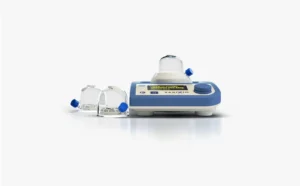
VARIXIO is an automated system used to prepare sclerosant foam. Its purpose is to standardise some of the foam’s physical characteristics, reducing variation associated with manual preparation. However, the device does not determine whether sclerotherapy is indicated and does not, by itself, guarantee a better clinical result.
The VARIXIO system prepares sclerosant foam according to standardised parameters.
What is VARIXIO?
The system consists of an agitation device and a sterile single-use capsule in which the foam is prepared. Depending on the product and configuration used, preparation may use sterile air or a mixture of physiological gases, with different concentrations of sclerosant.
Standardisation mainly concerns the preparation process: the liquid-to-gas ratio, bubble size, stability and reproducibility. These factors may assist the operator, but treatment results also depend on diagnosis, venous anatomy, the concentration and volume of the medicine, injection technique, ultrasound guidance when needed and the patient’s characteristics.
When sclerosant foam may be used
Treatment with sclerotherapy may be considered for reticular veins, varicose veins or other selected venous conditions. Not all visible veins need the same treatment, and not everyone is a candidate for foam.
The problem to be treated must be established before proceeding. At Centro Medico Gargano, a sclerotherapy session is preceded by a vascular assessment with venous colour Doppler ultrasound to examine the superficial and deep systems, any reflux and the extent of insufficiency.
Standardisation does not mean an absence of risk
Automated preparation does not make sclerotherapy free of possible adverse effects or complications. Indications, contraindications, concentration, volume, gas and injection method must be chosen by the doctor for the individual case. It is therefore inappropriate to claim that using the device alone guarantees greater safety, no complications or a faster recovery.
As with any sclerotherapy treatment, goals, alternatives, limitations, possible adverse effects and the need for follow-up or additional sessions should be discussed before the procedure.
What the available studies show
Laboratory studies have described the physical characteristics of foam produced by automated systems. Observational studies of the clinical use of VARIXIO are also available. These data are useful, but they do not guarantee superiority for every patient over all manual preparation techniques.
An article published in 2024 reported follow-up of patients treated for great saphenous vein insufficiency using foam prepared with an automated system. Its findings also show that recanalisation and the need for further treatment can occur over time. This reinforces the importance of explaining limitations and follow-up to patients accurately.
How it fits into care at Centro Medico Gargano
At Centro Medico Gargano, any use of VARIXIO forms part of a wider pathway: consultation, clinical assessment, preliminary venous colour Doppler ultrasound, selection of the technique and subsequent reviews. The device is a preparation tool; it does not replace diagnosis or make sclerotherapy the right solution for everyone.
For an overview of available options, see the page about varicose veins in Naples. For information about the professional background and diagnostic pathway, see Phlebology in Naples.
If you have bleeding, discomfort, itching or prolapse, it is important not to assume automatically that haemorrhoids are the cause. Medical assessment confirms the condition and determines whether further investigations are needed. Foam sclerotherapy is one outpatient option that may be considered for some patients with symptomatic internal haemorrhoidal disease.
What to check before choosing treatment
Correct diagnosis: rectal bleeding should not automatically be attributed to haemorrhoids without an appropriate assessment.
Individual indication: the choice depends on symptoms, the grade of disease and the patient’s characteristics.
Available alternatives: when sclerotherapy is not appropriate, other conservative, outpatient or specialist options should be considered.
Complete information: expected benefits, limitations, possible adverse effects and follow-up should be discussed before treatment.
Clear costs: the consultation, any treatment sessions and follow-up should be explained before starting the pathway.
When sclerotherapy may be considered
Sclerotherapy may be considered particularly for certain presentations of symptomatic internal haemorrhoids, but it is not suitable for every form of haemorrhoidal disease. An initial consultation is therefore essential to establish whether treatment is indicated, feasible and appropriate for the individual case.
The pathway at Centro Medico Gargano
The pathway begins with assessment by Dr Ciro Gargano. If the consultation establishes that sclerotherapy is indicated and can be performed safely, treatment may take place during the same appointment. This is decided case by case and cannot be guaranteed before the consultation.
The main page about haemorrhoid sclerotherapy in Naples describes preparation, the procedure, possible sessions, limitations, adverse effects, scientific sources and how to book.
What cannot be promised
It is not appropriate to promise complete freedom from pain, a permanent cure, no possibility of recurrence or identical results for everyone. Tolerability, response and the need for further sessions vary according to the clinical situation, so recommendations are individual and reassessed over time.
Choosing a varicose vein clinic in Naples should not be based solely on slogans, lists of technologies or reviews. It is useful to check that the pathway begins with clinical assessment and, when indicated, venous colour Doppler ultrasound, and that the available options are explained with their expected benefits, limitations and alternatives.
What to check before choosing
Training and professional experience: the doctor should have demonstrable expertise in assessing venous conditions and in the proposed techniques.
Diagnostic pathway: treatment decisions should follow the consultation and tests that are actually needed, rather than simply the presence of visible veins.
Individual recommendations: not all varicose veins require the same treatment, and not every method is suitable for every patient.
Understandable information: goals, limitations, possible adverse effects, alternatives and subsequent reviews should be clear before proceeding.
Follow-up: it is useful to know in advance how results will be checked and when further reviews may be needed.
Why diagnosis comes before treatment
Visible veins alone cannot establish the origin of the problem. Specialist assessment and colour Doppler ultrasound, when indicated, examine the venous circulation, identify any reflux and distinguish a mainly aesthetic concern from venous insufficiency. Read more on the page about varicose veins in Naples.
Which treatments may be considered
Depending on the clinical and ultrasound findings, options may include conservative measures, compression therapy, sclerotherapy, endovenous saphenous vein treatments or ambulatory phlebectomy in selected cases. The choice is not automatic: it depends on the distribution of reflux, symptoms, venous anatomy and the patient’s characteristics.
The pathway at Centro Medico Gargano
At Centro Medico Gargano, assessment is overseen by Dr Ciro Gargano. The pathway focuses first on diagnosis and then on choosing treatment proportionate to the findings, avoiding presenting one technique as a solution for everyone. For information about training and professional practice, see Phlebology in Naples.
Venous insufficiency of the lower limbs is a condition in which blood returns from the legs to the heart less efficiently. It may result from reflux, valve dysfunction, impaired outflow or the consequences of a thrombosis, and may cause heavy legs, swelling, varicose veins or skin changes. Symptoms alone do not establish a diagnosis: a clinical assessment and, when indicated,venous colour duplex ultrasound help identify the location and mechanism of the problem.
At a glance
Possible symptoms Heaviness, swelling, pain, itching, cramps, varicose veins and skin changes.
Main investigation Venous colour duplex ultrasound combined with clinical assessment and dynamic manoeuvres.
Treatment Depends on the cause and may include movement, compression, sclerotherapy or saphenous vein procedures.
Warning signs Sudden swelling of one leg or difficulty breathing requires urgent assessment.
Assessment in Naples
Lower-limb venous colour duplex ultrasound with a phlebological consultation included Appointment duration: 60 minutes · Price shown in the booking calendar.
The price, availability and conditions are shown before confirmation.
The veins in the legs return blood to the heart against gravity. Venous valves, the calf muscle pump and ankle movements all contribute to this process. When the system cannot maintain effective flow, pressure in the veins may rise and lead to chronic venous disease.
“Chronic venous disease”, “venous insufficiency” and “varicose veins” are not exact synonyms. Varicose veins are enlarged, tortuous superficial veins; venous insufficiency describes an impairment of venous return, often associated with reflux or obstruction. Venous symptoms may occur without large visible varicose veins, while isolated thread veins may be present without significant venous insufficiency.
Symptoms and signs of venous insufficiency
Symptoms may be more noticeable at the end of the day, in hot weather or after many hours standing or sitting. Common symptoms and signs include:
heaviness, tiredness or a feeling of tension in the legs;
brownish pigmentation, venous eczema or skin hardening;
slow-healing wounds or venous ulcers in more advanced cases.
The severity of symptoms does not always match the size of the visible veins. A proper assessment relates the patient’s symptoms to the clinical signs and haemodynamics observed on colour duplex ultrasound.
Causes, contributing factors and differential diagnosis
Venous insufficiency may be primary, with valve dysfunction and reflux predominating, or secondary, for example following venous thrombosis. Family history, age, pregnancy, excess weight, a sedentary lifestyle and prolonged standing or sitting may contribute to or worsen the condition, but do not establish the diagnosis on their own.
Not all swollen legs are caused by veins. Oedema and pain may have lymphatic, cardiac, renal, hepatic, medication-related, joint or muscular causes; lymphoedema and lipoedema also require specific assessment. The page on swollen and heavy legs explores this differential diagnosis in more detail.
How venous insufficiency is diagnosed
Diagnosis begins with the medical history and clinical examination: the pattern of symptoms, family history, pregnancies, medication, work, physical activity, previous thrombosis or vein treatments. The clinical examination assesses oedema, the distribution of varicose veins, thread veins, skin, arterial pulses and any findings suggesting non-venous causes.
When indicated, venous colour duplex ultrasound assesses the patency of the deep venous system, any post-thrombotic changes, the behaviour of the saphenous veins and major junctions, the direction and distribution of reflux, and its relationship with varicose tributaries. The result is more than an anatomical description: it provides a haemodynamic map to guide treatment decisions.
Why venous colour duplex ultrasound is a dynamic examination
In my protocol, the examination is performed with the patient both lying down, in the supine position, and standing, in the upright position. Standing changes the pressure exerted by the column of blood and may reveal reflux that is less apparent at rest. An examination performed only while lying down may therefore not fully describe the haemodynamic behaviour of the veins.
Valsalva manoeuvre
During the Valsalva manoeuvre I ask the patient to strain for a few seconds as if having a bowel movement. The temporary increase in chest and abdominal pressure changes venous return and allows assessment of flow, particularly in proximal segments and at the saphenofemoral junction. Valsalva does not replace the other manoeuvres: each test explores a different aspect of venous function.
Calf compression and release
Manual compression followed by release of the calf, often called squeezing, rapidly changes blood flow and helps identify any pathological reversal. The manoeuvre must be adapted to the area being examined and the patient’s tolerance.
Paraná manoeuvre
During the Paraná manoeuvre the patient stands and receives a gentle, controlled push from behind. To maintain balance, the lower-limb muscles and calf pump activate automatically. This allows me to observe flow during contraction and subsequent relaxation under conditions closer to the physiology of movement.
In my clinical experience, the Paraná manoeuvre may reveal reflux that is less apparent with simple manual calf squeezing. It is particularly useful when the calf is tender to palpation: it avoids potentially painful direct compression and, in some patients, may be the best-tolerated provocative manoeuvre or the only one that can realistically be performed.
Animation of the Paraná manoeuvre: a gentle push from behind activates the calf muscle pump while standing, allowing the venous flow response to be observed.
What I assess during the consultation and colour duplex ultrasound
deep-vein patency and compressibility, including any post-thrombotic changes;
the saphenofemoral and saphenopopliteal junctions and valve function;
the great and small saphenous veins, their diameter and course, and any segmental or axial reflux;
reticular veins, varicose tributaries and clinically relevant perforating veins;
the duration, direction, origin and distribution of reflux provoked by the different manoeuvres;
the relationship between ultrasound findings, symptoms and clinical signs;
whether further assessment of lymphatic, arterial or systemic causes of swelling is needed.
The manoeuvres are not automatically applied in the same way to everyone. The choice depends on the venous segment being examined, the findings, the patient’s mobility and any pain. This provides clinically useful information while keeping interpretation central to the examination.
How venous insufficiency is treated
There is no single treatment suitable for everyone. The choice depends on symptoms, the site of reflux or obstruction, the condition of the deep venous system, the characteristics of the visible veins, general health and the patient’s goals.
Movement, daily habits and compression
Walking, regularly moving the ankle, breaking up prolonged immobility and addressing aggravating factors may reduce heaviness and venous pooling. Compression stockings may be useful in selected cases, but their type, size and compression class must be appropriate; arterial circulation may also need assessment before they are prescribed.
Sclerotherapy and treatment of varicose veins
Liquid or foam sclerotherapy may be used for thread veins, reticular veins and selected varicose veins; in appropriate cases it can be performed under ultrasound guidance. Treatment of visible veins is planned after establishing whether there is a feeding vein or more proximal reflux.
Saphenous vein treatment
When clinically significant saphenous reflux is present, endovenous procedures such as radiofrequency ablation, or other conservative or interventional strategies, may be considered. Not every enlarged saphenous vein needs treatment: the indication depends on the haemodynamic map, symptoms and the balance of benefits and limitations. More information is available on the page about saphenous vein treatment.
Skin changes, ulcers and post-thrombotic conditions
Skin changes, ulcers and post-thrombotic syndrome require a specific care pathway that may combine dressings, compression, treatment of the responsible veins and management of other medical conditions. Complex cases may require the involvement of other specialists.
Phlebological assessment at Centro Medico Gargano
At Centro Medico Gargano in Naples, the assessment is performed by Dr Ciro Gargano, a specialist in diagnostic radiology with a second-level university Master’s qualification in Haemodynamics and Advanced Venous Surgery. Combining clinical examination, colour duplex ultrasound and haemodynamic interpretation enables a care pathway based on the problem identified, rather than simply on the presence of a visible vein.
For guidance on when to see a specialist, also visit the Phlebologist in Naples page. The clinic is at Via Marchese Giuseppe Palmieri 71, 80141 Naples, Italy.
Frequently asked questions about venous insufficiency
Can venous insufficiency be cured permanently?
This depends on its cause and extent. Treatment may reduce reflux, symptoms and complications, but the underlying venous predisposition may persist and new veins may appear over time. It is therefore more accurate to discuss personalised management and treatment than to guarantee a permanent cure.
What is the difference between venous insufficiency and varicose veins?
Varicose veins are enlarged, tortuous superficial veins. Venous insufficiency is an impairment of blood return, often due to reflux or obstruction. The two conditions may coexist, but they are not equivalent.
Why is colour duplex ultrasound also performed while standing?
Standing changes the pressure of the column of blood, making some reflux more apparent. The examination may therefore include assessments while lying down and standing, together with Valsalva, compression-release and the Paraná manoeuvre.
Are compression stockings always necessary?
No. They may be useful in selected cases, but the type, size and compression class should be chosen according to the diagnosis, tolerance and any arterial problems or other contraindications.
Why can varicose veins return after treatment?
A treated vein may remain closed or be removed, but venous disease can progress and affect other segments. New varicose or reticular veins may also develop; recurrence does not automatically mean that the previous treatment was performed incorrectly.
When does a swollen leg require urgent attention?
Sudden swelling, particularly of one leg, requires prompt assessment even when not all the other signs are present. If sudden difficulty breathing or chest pain occurs, call 112 or 118 in Italy.
Can I book sclerotherapy directly?
For varicose and thread veins, a preliminary assessment with colour duplex ultrasound performed by Dr Gargano at the Centre is required. Treatment is scheduled only after the anatomy and haemodynamics of the venous system have been established.
Related information
For more information about diagnosis, symptoms and possible treatments, explore these clinical pages:
Lower-limb venous colour duplex ultrasound with a phlebological consultation assesses the deep and superficial venous systems, the saphenous veins, reflux and possible causes of symptoms. The consultation is included.
To provide the best experiences, we use technologies such as cookies to store and/or access device information. Consenting to these technologies will allow us to process data such as browsing behaviour or unique IDs on this site. Not consenting or withdrawing consent may adversely affect certain features and functions.
Functional Always active
Technical storage or access is strictly necessary for the legitimate purpose of enabling the use of a specific service explicitly requested by the subscriber or user, or for the sole purpose of transmitting a communication over an electronic communications network.
Preferences
Technical storage or access is necessary for the legitimate purpose of storing preferences that are not requested by the subscriber or user.
Statistics
Technical storage or access used exclusively for statistical purposes.Technical storage or access used exclusively for anonymous statistical purposes. Without a subpoena, voluntary compliance by your Internet Service Provider, or additional records from third parties, information stored or retrieved for this purpose alone cannot usually be used to identify you.
Marketing
Technical storage or access is necessary to create user profiles to send advertising, or to track the user on a website or across several websites for similar marketing purposes.