



Lymphoedema and lipoedema are different conditions and require different approaches to diagnosis and treatment. Lymphoedema involves a chronic build-up of protein-rich fluid caused by reduced capacity of the lymphatic system. Lipoedema is a chronic condition of the fatty tissue, typically symmetrical and painful, which mainly affects the lower limbs and tends to spare the feet. These conditions may coexist with obesity, venous insufficiency or swelling from other causes.
At Centro Medico Gargano in Naples, assessment begins with a clinical consultation. Venous colour Doppler ultrasound is used when a venous cause needs to be investigated or excluded. Segmental bioimpedance analysis can provide additional information about fluid distribution and changes over time, but does not replace a clinical diagnosis.
Booking and price
Specialist assessment of lymphoedema, lipoedema and swollen legs
Service price: see the booking calendar
Time allocated for the appointment: 60 minutes
The service includes:
- Specialist consultation
- Assessment with a transilluminator
- Venous and arterial colour Doppler ultrasound
- Professional segmental bioimpedance analysis
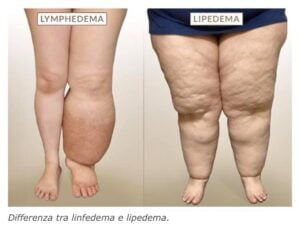
How lymphoedema and lipoedema differ
Signs more suggestive of lymphoedema
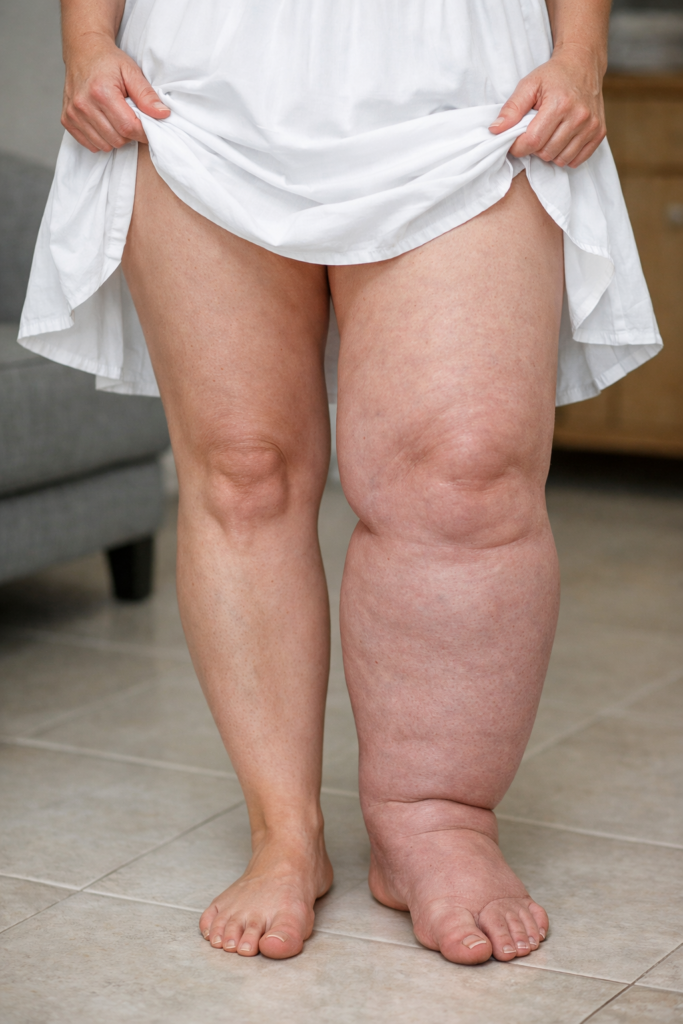
- swelling that may be asymmetrical or affect only one limb;
- possible involvement of the top of the foot and the toes;
- swelling that initially leaves an indentation when pressed and may become more fibrotic over time;
- a feeling of tightness or heaviness and reduced mobility;
- skin changes and a greater risk of infections such as erysipelas in more advanced cases.
Lymphoedema may be primary, due to abnormalities in lymphatic development, or secondary to surgery, radiotherapy, infections, injuries, cancer, severe obesity or other conditions. Stemmer’s sign can be helpful, but its absence does not rule out lymphoedema.
Signs more suggestive of lipoedema
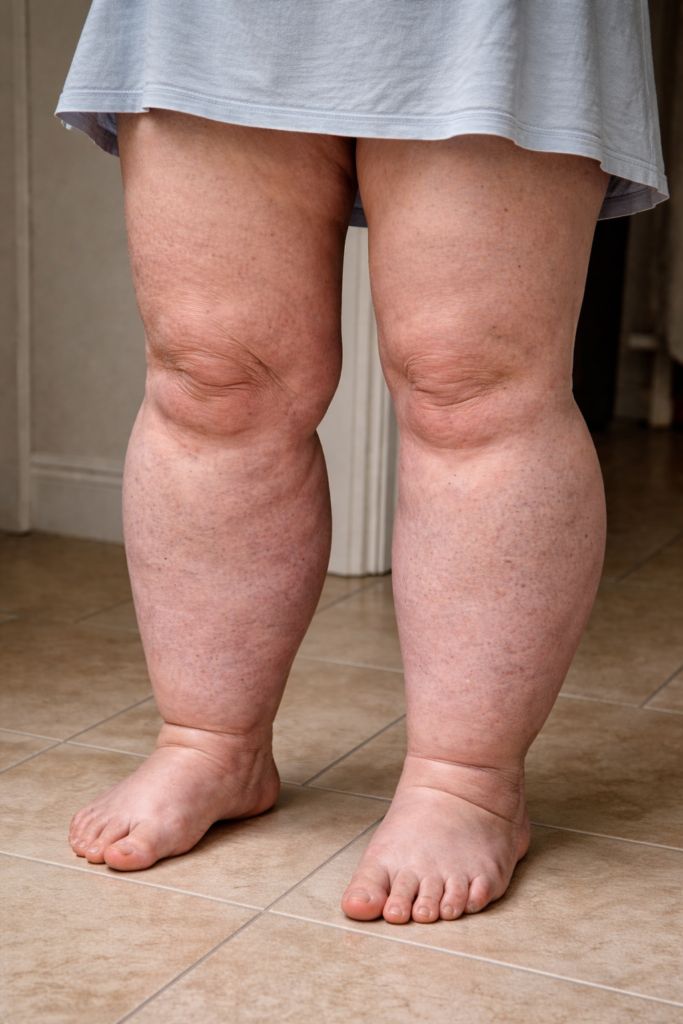
- an increase in the size of the lower limbs that is generally symmetrical;
- a disproportion between the trunk and legs, with the feet often spared;
- pain or tenderness on pressure;
- easy bruising;
- a feeling of heaviness that may worsen during the day.
Lipoedema affects almost exclusively women, but it is not simply obesity or a form of water retention. Weight may affect symptoms and mobility, while the characteristic fat distribution can persist after weight loss. Secondary lymphatic involvement may develop in advanced cases.
Diagnosis is primarily clinical
Assessment considers the distribution of increased volume, tissue texture, pain, bruising, foot involvement, pitting oedema, Stemmer’s sign, skin condition, mobility, previous surgery and family history. Venous insufficiency, thrombosis, medication-related swelling, heart, kidney or liver disease, obesity and other causes of swollen legs must also be considered.
The role of colour Doppler ultrasound
Colour Doppler ultrasound does not directly diagnose lipoedema or measure lymphatic drainage. It examines the deep and superficial venous systems, looking for reflux, changes following thrombosis and other vascular conditions that may contribute to swelling and affect treatment.
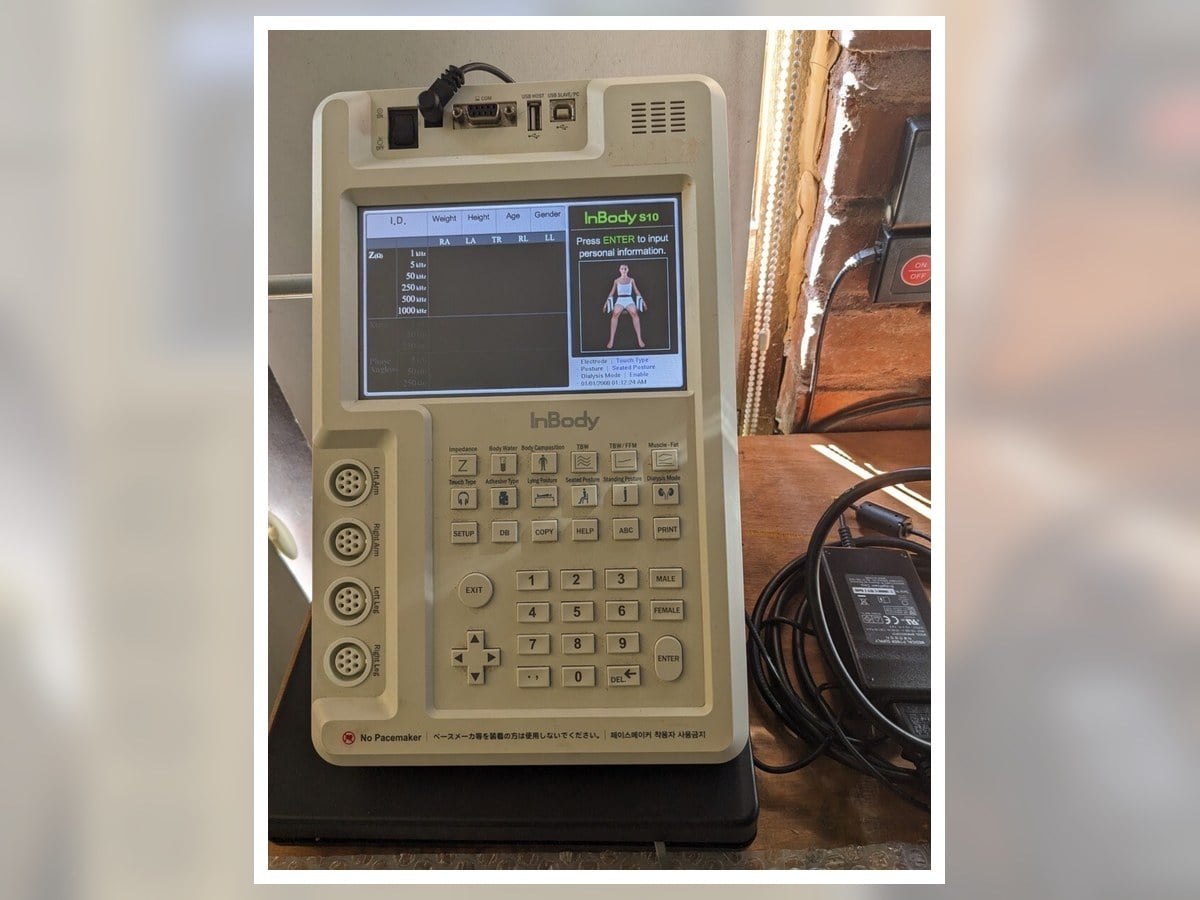
Segmental bioimpedance analysis with InBody S10
Segmental bioimpedance analysis estimates the distribution of body water and the ratio of extracellular to total water in different body segments. It can be useful as an additional measurement to document asymmetry and monitor the fluid component over time, particularly in lymphoedema and mixed conditions. On its own, it cannot confirm or exclude lipoedema or lymphoedema, or replace consultation, clinical measurements and other indicated investigations.
Lymphoscintigraphy, lymphatic MRI and other specialist investigations are reserved for cases where the clinical picture is unclear, when the result may change management, or before specific procedures.
Treatment of lymphoedema
Conservative treatment generally involves an individual programme that may include:
- compression with suitable bandages or garments, often flat-knit where indicated;
- exercise, movement and maintaining mobility;
- skin care and infection prevention;
- manual lymphatic drainage as part of decongestive therapy when appropriate;
- management of factors that increase the load on the lymphatic system, including obesity when present.
Lymphatic surgery or tissue reduction procedures may be considered at specialist centres for selected patients. They do not automatically replace compression management and follow-up.
Treatment of lipoedema
The aims are to reduce pain and functional limitations, support physical activity and independence, and treat associated conditions. Management may include education, adapted exercise, nutritional support where overweight or obesity coexist, compression if it relieves symptoms or controls swelling, and psychological support when needed.
Liposuction using a technique designed to preserve lymphatic vessels may be considered for selected patients with persistent symptoms after conservative treatment, at centres with relevant expertise. It is not risk-free and should not be presented as an automatic or definitive solution.
Carboxytherapy and sclerotherapy: their limitations
Carboxytherapy is not a standard first-line treatment for lymphoedema. In lipoedema, a small pilot study involving 22 participants assessed carboxytherapy and diet over ten weeks. Its size, duration and combination of interventions do not establish it as a proven therapy or a replacement for recommended treatments. Any use should therefore be presented as complementary, with realistic aims and informed consent.
Sclerotherapy treats abnormal veins, rather than lipoedema or lymphoedema themselves. It may be indicated only when documented, clinically significant venous disease also exists.
When to seek prompt assessment
Sudden swelling on one side, calf pain, redness, fever, breathing difficulty or chest pain require prompt assessment. Repeated episodes of erysipelas or rapidly worsening swelling also warrant medical review.
Sources and further reading
- International Society of Lymphology: 2023 Consensus Document on the diagnosis and treatment of peripheral lymphoedema.
- 2024 S2k guideline on lipoedema.
- Pilot study of a Mediterranean ketogenic diet and carboxytherapy in lipoedema.
Assessment at Centro Medico Gargano is carried out by Dr Ciro Gargano, a medical doctor specialising in diagnostic radiology who practises angiology and phlebology. For the address and practical information, see Contact and directions.
