



Outpatient sclerotherapy is a medical treatment that closes selected veins by injecting a sclerosant medicine. It may be indicated for thread veins, telangiectasia, reticular veins and some varicose veins. The choice of technique, liquid or foam formulation and concentration depends on the type of vein and clinical findings; there is no single protocol suitable for everyone.
On this page
Learn more: Thread veins on the legs and face: treatments and before-and-after photos.
Diagnosis comes before treatment
At Centro Medico Gargano, a vascular assessment with venous colour duplex ultrasound is required before a sclerotherapy session. This examination assesses the superficial and deep venous systems, identifies any reflux, distinguishes isolated thread veins, reticular veins, varicose tributaries and saphenous trunk insufficiency, and helps plan the most appropriate treatment. To arrange the required assessment at Centro Medico Gargano, book Colour Duplex Ultrasound + Vascular Consultation. Any sclerotherapy is scheduled only after the colour duplex ultrasound and consultation performed by Dr Ciro Gargano at Centro Medico Gargano.
How sclerotherapy works
The sclerosant medicine produces a controlled reaction in the inner wall of the treated vein, encouraging it to close. Blood is redirected through other functioning veins. Over time, the closed vein may shrink and become less visible. This is a gradual process, and the result cannot be assessed immediately after the injection.
Liquid or foam sclerotherapy
Liquid sclerosant is often used for small superficial vessels. Foam increases contact between the medicine and the vein wall and may be used, including under ultrasound guidance, for selected larger veins. Foam is not automatically preferable in every situation: the indication, preparation method, volume and concentration must be determined individually.
What happens during a session?
- assessment of the area to be treated and confirmation of the indication;
- explanation of expected benefits, alternatives, limitations and risks;
- injection of the medicine into selected veins, with ultrasound guidance when needed;
- compression where appropriate and personalised instructions for the following days;
- clinical or ultrasound follow-up according to the type of vein treated.
How many sessions are needed?
The number of sessions depends on the extent and diameter of the veins, the individual response and the treatment goal. Some areas can be treated in one session; others require several appointments or different techniques. The need for further sessions does not necessarily mean that treatment has failed, but may reflect the distribution of venous disease.
Results and limitations
Sclerotherapy can make the treated vessels less visible and, in suitable cases, improve symptoms associated with superficial veins. However, it does not remove the predisposition to venous disease: new telangiectasia or varicose veins may develop elsewhere over time. It would be misleading to promise a complete or permanent result, or the same outcome for everyone.
Possible side effects
Local effects may include temporary pain or burning, bruising, hardening of the vein, superficial inflammation and pigmentation. Less common reactions can also occur. Transient symptoms such as headache, cough, chest tightness or visual disturbances have been reported with foam; thromboembolic or neurological events are rare but must be considered during informed consent. The initial assessment also identifies conditions requiring particular caution or an alternative approach.
When might another technique be preferable?
If saphenous insufficiency or varicose veins with specific anatomical characteristics are present, other options may be considered, such as endovenous thermal treatment, saphenous vein treatment, ambulatory phlebectomy, compression therapy or monitoring. The choice is based on the diagnosis, rather than simply a preference for one particular method.
Foam sclerotherapy: before-and-after photographs
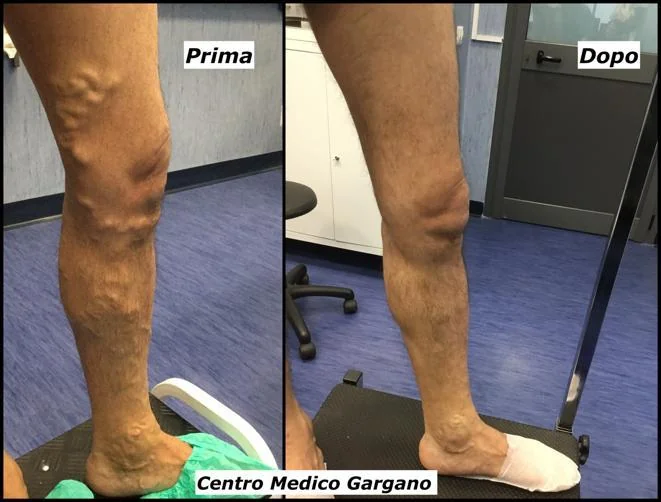
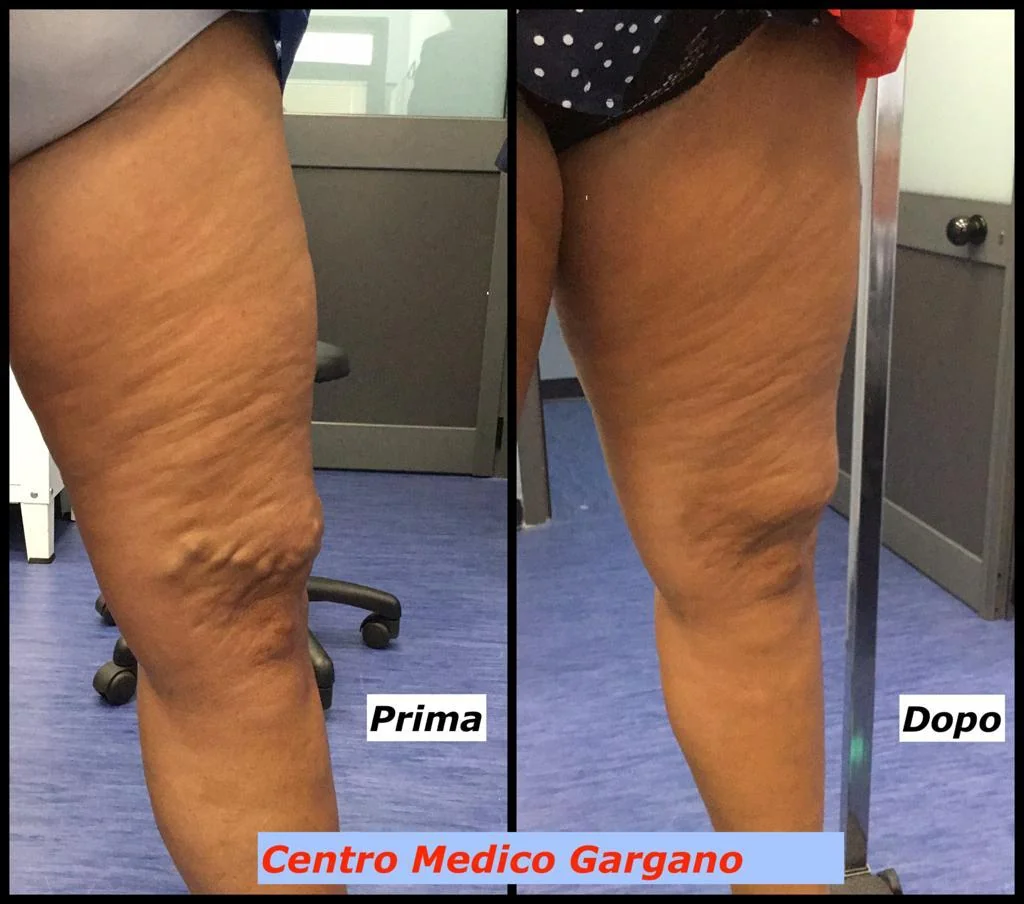
Photographic comparisons of cases treated at Centro Medico Gargano in Naples. The Before and After labels identify the two stages of treatment. The post-treatment photographs were taken at varying intervals, all less than 2 months after treatment.
Click or tap a photograph to enlarge it.
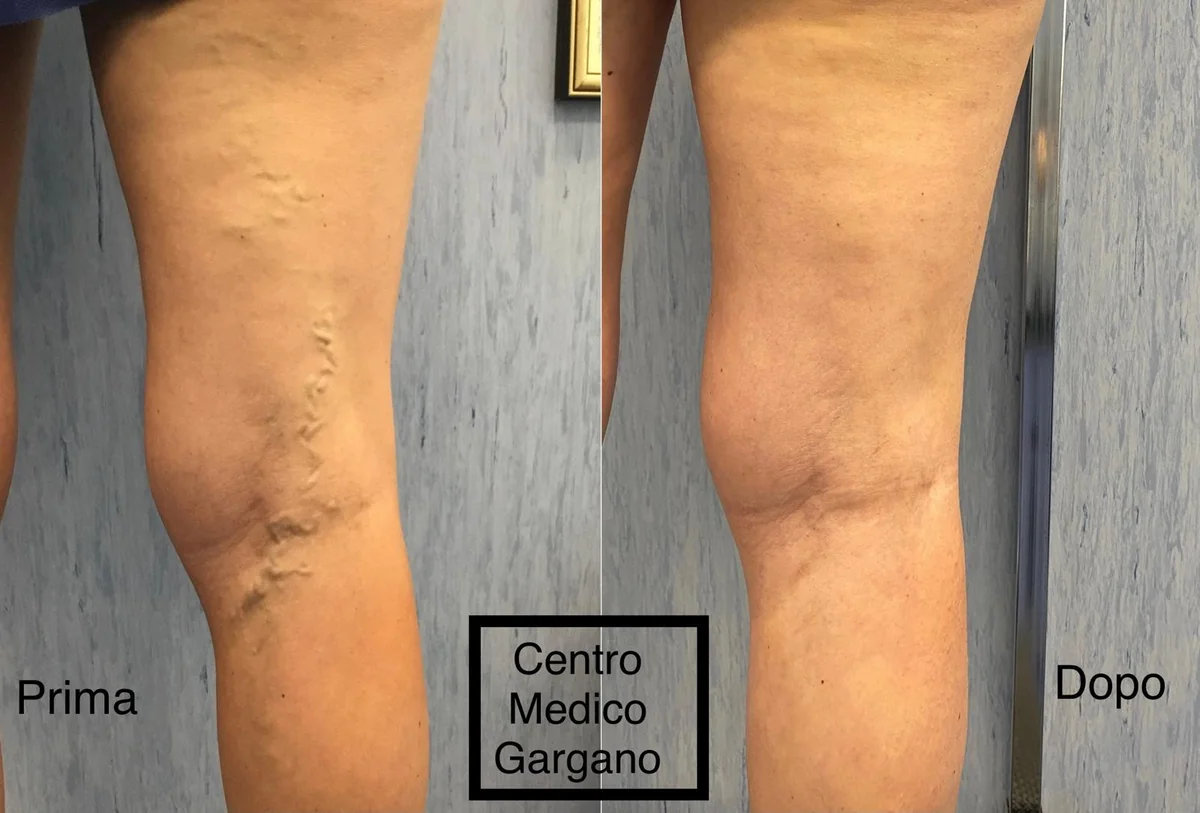
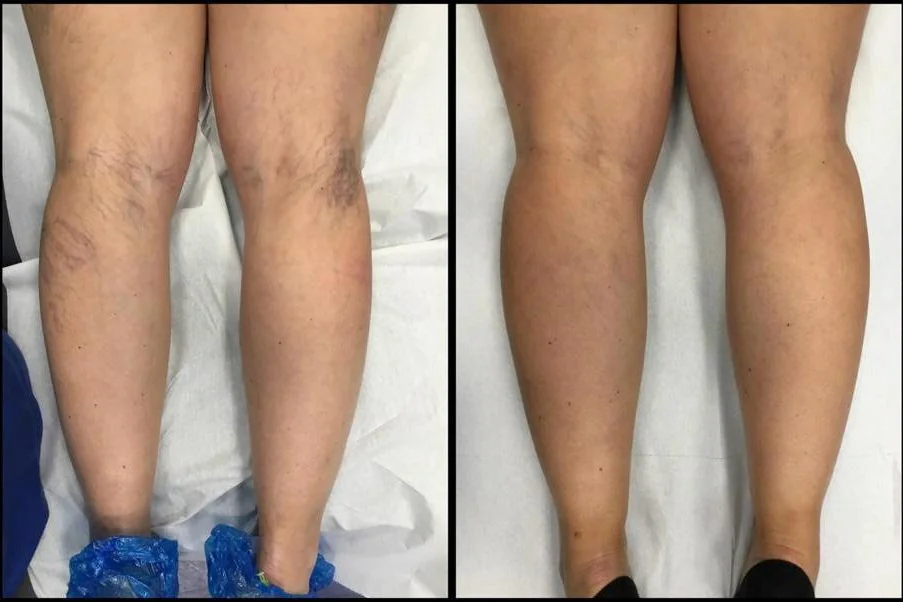
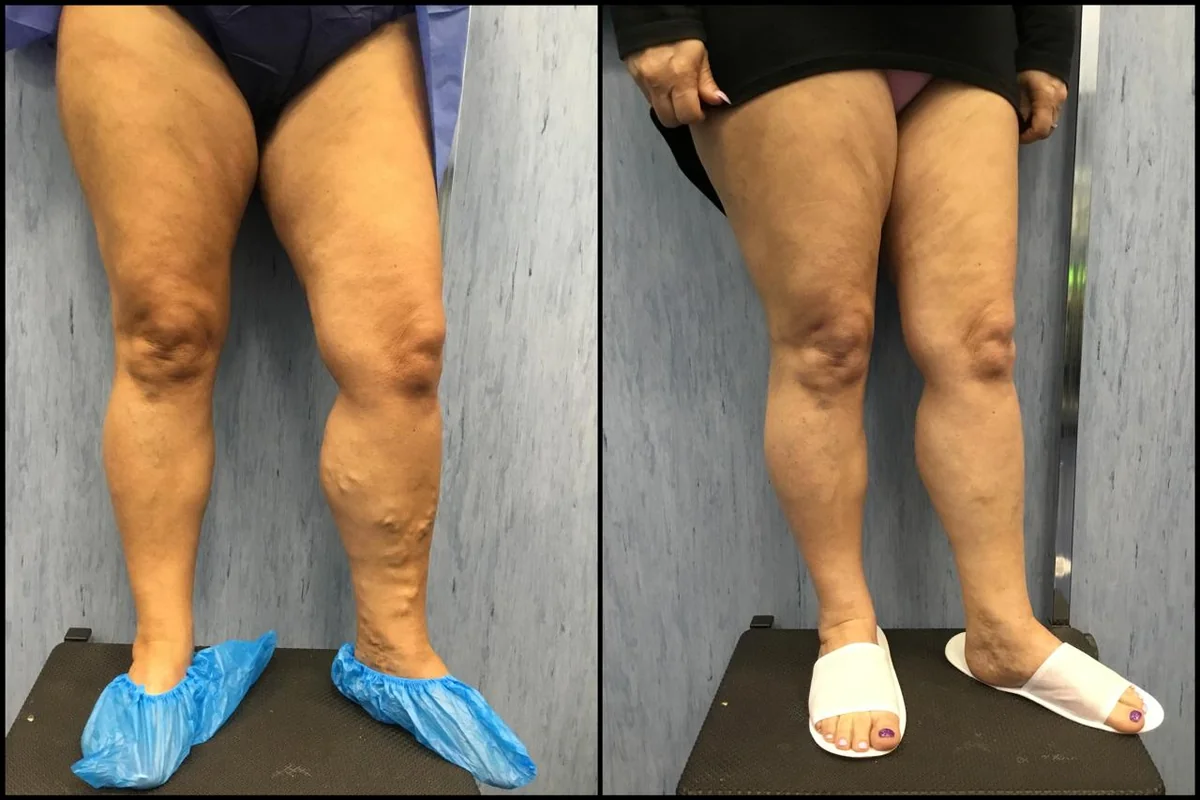
Varicose tributary of the great saphenous vein: result after 5 weeks

Great saphenous vein: before and 1 month after
Foam sclerotherapy of the great saphenous vein. The after photograph was taken 1 month after treatment. Posture and framing differ between the two photographs.
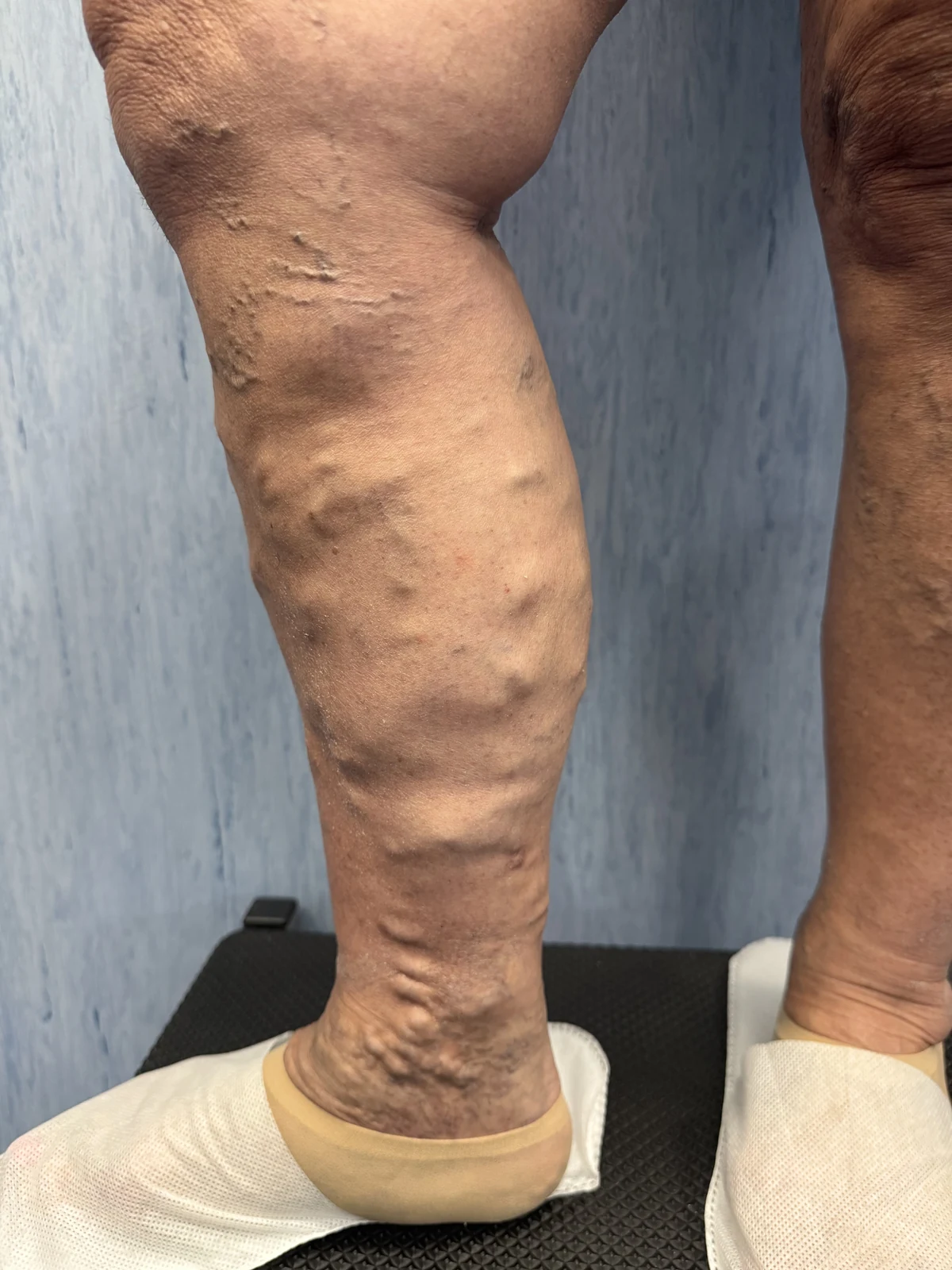
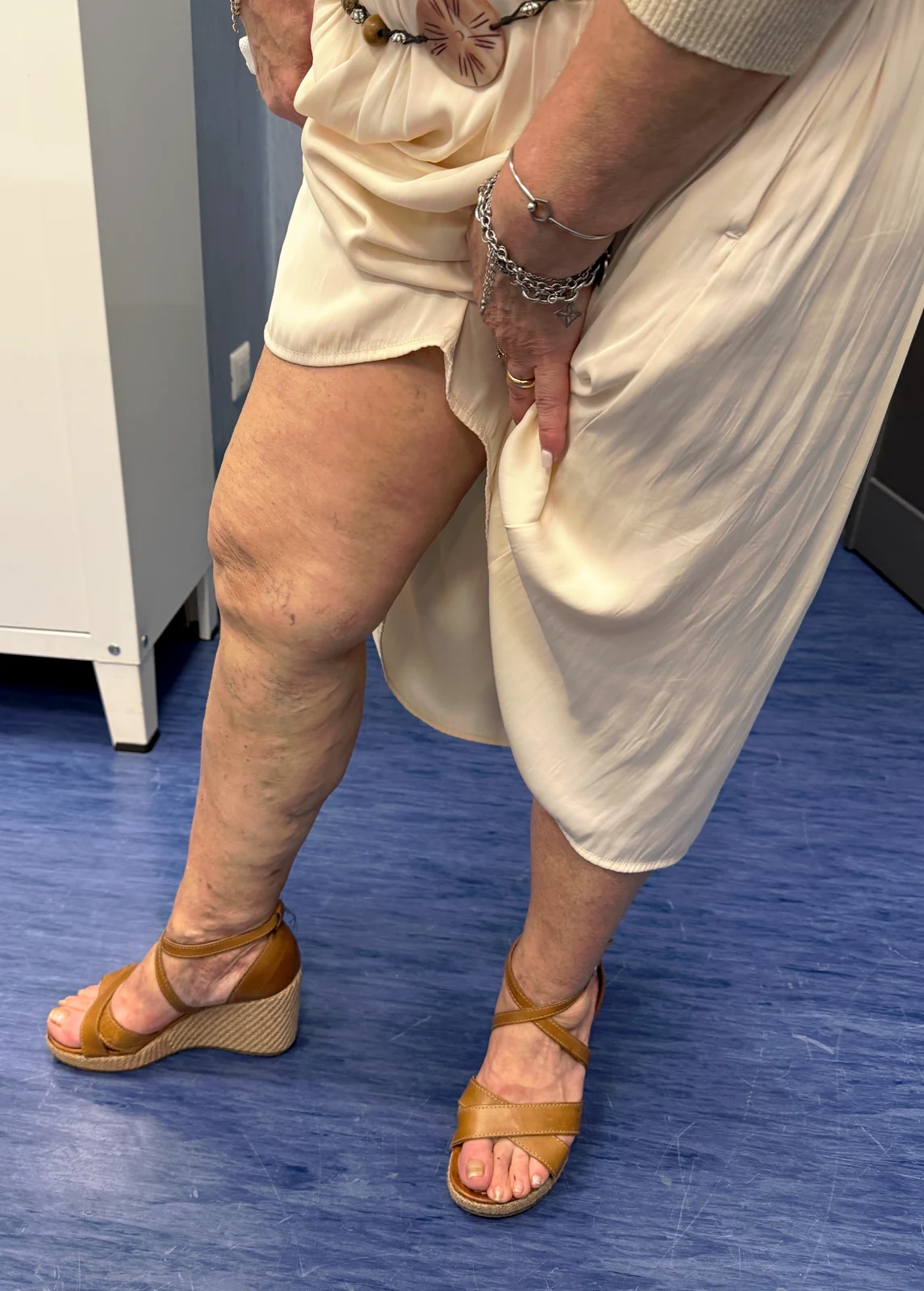
Results vary from person to person. These photographs document the cases shown and do not guarantee the same result for other people.
Reference sources
Recommendations on ultrasound-guided foam sclerotherapy are available in NICE HTG301. The general assessment of varicose veins is described in NICE CG168 and the ESVS guidelines on chronic venous disease. These sources do not replace an individual assessment.
